Life Skills, United States

The Importance of Feeling Small

I’ve been thinking a lot lately about the importance of feeling small. We tend to think of it as a bad thing: feeling “less than” others. Feeling unimportant. Feeling hidden. But there is another aspect of feeling small. The one that allows you to feel the mighty wonder of something else. To feel small against it, and in relation, to feel its power, and relocate our own.


I suppose this may sound like a religious sentiment, and ironically, I’m writing this on Easter. But I’m not a religious person. I get my feeling small from being out in nature, and I love it.


I started contemplating feeling small in October, when I was traveling through Utah. Newly reunited with the dog after a year of separation, I was generally gleeful, and grateful, but I was also venturing to a new territory and a major life change: living in LA, looking for a job, staying in one place.


Spanky and I set out on a couple of hikes – two in Goblin Valley State Park – in Little Wild Horse Canyon, where we had to stop after a mile or so because poor Spanky couldn’t scale the narrow sandstone walls, and out the Curtis Bench Trail, where we wandered among hoodoos and I contemplated how similar they were to the fairy chimneys of Cappadoccia, and marveled at the amazing things that Nature creates. The next day found us in Escalante, heading toward Lower Calf Creek Falls on a sandy trail through a valley where fall foliage danced in the sun. Turning a corner the last quarter mile before the falls, the temperature dropped at least fifteen degrees and we were met with a cool wind, and then a misty spray, and then the falls themselves, rising 100 feet up a cliff of reddish rock. We stood small against it, had our picture taken, lapped the cool water, and wandered back toward the car tired, happy, refreshed.

IMG_7707


From there, we made our way to Devil’s Playground to watch the sun set. The unpaved Hole In the Rock Road stretched ten washboarded miles into unblemished Utah, depositing us in a playground of rock formations that look almost like sand towers and the waves that break them. Spanky was nursing a bloody foot pad from two excited days of pantering through the sand, so we kept our wandering to a minimum. I sat him in a stay while I climbed around and recalled with joy the sense of adventure I’d had all over the world at similar sights – formations of natural origin so astounding in sight they seem otherworldly, which reminds me, always, how magical the world really is. And the lookout from that place, out on a valley of alien sights, familiar to me because I had seen something similar a world away, and new and strange here in my own country, made me feel so wonderfully small, so thankfully little in comparison to the magical mastery that is Nature.

IMG_3573

This week, today, April 5th, marks one year since I flew back into the United States, after visiting 17 other countries. Lately, in Los Angeles, looking for the place where I fit and the job that I can both master and enjoy, I have on occasion felt small in the bad way. The way that makes one feel inconsequential, unnoticed, not fully worthy of the wonder that surrounds and as a consequence, less capable of seeing it, even right there in front of me. It is a great reminder to put myself in the place where I feel blissfully small, and so it happily coincided with plans to hit the road.


Which is how I found myself in Joshua Tree National Park for the first time. Dogs are not allowed on trails in the National Parks, so Spanky and I wandered on dirt roads around Hidden Valley, again staring up in wonder at stone formations – Intersection Rock, of climbing fame, and Skull Rock, of tourist fame. We drove south to the 10 through the cholla patch, the cactus flowering around us, the sacred datura blooming in treacherous, ostentatious piles by the road side. The ocotillo waved red paintbrushes up at the sky. And the Joshua Trees, of course, scratched up at its surface.

Ocotillo2


JoshuaTree2


Cactusbloom2


And then here, to what could easily be considered a Phoenix suburb, where an easy morning hike puts you up against a hillside of cordon cactus, one of which is older than my great grandfather would be, were he still alive. . And 30 feet tall. There was a cautionary rattler sunning itself by the creek, whose watertable is now starting to retreat to its summer home beneath the ground.

01b54cabdfeb6db635f71e7ac01c5b9912af50c3f3


At night, the same trail by moonlight has a different face. Cool breeze through the wash, red-spotted toads hopping across the footpath, which you take more slowly in the dim brilliance of the full moon. No headlamp. Just Nature’s magnificence to light your way. And still, you can make out the outline of the giants, standing tall, prickly, resilient among their history, making you feel small in the best of ways. You shrink beneath them, and you feel closer to the ground. Grounded. Your problems less insurmountable. Your place potentially still unsure, but certainly less tenuous. Your place, here.

01f5a2db9968009171e3fbe53e415bbd37ac0b2831

Dallas

The Story of Hanna Rigler

It seems only appropriate, with Passover coming next week, to share the below.

I was in Dallas briefly at the beginning of March to celebrate some fantastic ladies who came to Paris to meet me for my birthday last year , and a friend invited me to go with her to the Holocaust Museum. I’d never been, in the whole 8 years I lived there. How could I say no?

IMG_0804

With Fantastic Ladies, In Paris


The special exhibit at the museum right now is about the flight of Margret and H.A. Rey, the creators of Curious George, from Paris to Brazil, and then the US, during WWII. The truly special exhibit, though, was this woman:

Hanna Rigler

Hanna Rigler


This is Hanna Rigler, also known as Sarah, a Lithuanian Jew who survived a ghetto, a camp, and a harrowing escape, which she wrote about in her book Ten British POWs Saved My Life. The following is what stuck with me after listening to her talk, and speaking with her afterwards.


_____________________

The men were mostly gone by the time they came and took the children, during the day while the adults were at work. The old people, and the children. Imagine: coming home to find your children and your parents gone. Your children, whom you had birthed and nurtured and then guarded when you were moved from your neighborhood, your own home, to this ghetto. Your parents, whom you had guarded, as well, as they aged, whom you fought with, disagreed with, loved, cherished, appreciated because they watched your children so you could go get what little work there was to be had, what meager money to be earned. And then to come home and find the building empty, the family gone. This, no more:

Matuson Family

The Matuson Family (Hanna’s Maiden Name)


But like you say over and over, you were lucky. You were lucky, and it makes all the difference. You were too young to have a family yet. You and your sister had found work, cleaning and cooking in an official’s house, so you were not at home when they came to take you. So when your mother came home, she didn’t see what others saw: the vaccuum. Instead, she saw you. The fate of everyone you knew – all your friends, their families – the elderly, the young, the men: unknown. There would be little time to adjust to this demographic shift; soon, they will be coming for you.

They will come for you and what is left of your family – the mother, the sister. They will put you in the cattle car of a train, in Lithuania, in July, where the heat makes its way through the wooden slats of the wall but the air is nowhere to be felt. The lack of air presses down on you like the bodies of too-many people shoved in next to you. The smell of the one bucket you all share in a corner will bear on you too. You will think it is too much to survive, but you will. You will travel like this for days – seven days, nine days – who knows how many? And when you arrive, you have only just begun.

You will be given a number.

There must have been number 1. By the time they get to you, the number will be greater. It will be 58386, and you will wonder where everyone has gone, because when you arrive, the camp will seem empty, except for the shoes. The shoes pile high. They will pile high long after you are gone, and bear witness to the 58,385 pair of feet who walked through the gate before you.

There is a rumor that the Red Cross is coming to visit POWs, and so you will be kept alive, for now. Soon, when the threat of freedom comes, the marching will start. You will be lucky, and get a coat. It will be a bad coat, thin, and you will have no choice but to wonder to whom it used to belong, and which pair of shoes from that pile were also hers, but you will wear it as you walk away, moving in front of the front.

You talk about the unpleasant things. You will mention, to catch the attention of errant school kids, the hunger – how the coffee you got was really water; how the soup was water too, with just a little cabbage; and how the one small bread was meant for ten people and never enough, and yet you lived for the bread. Or because of it. You will tell the children how you would swear that if you had enough bread to eat, you would never want for anything else in your life, save for maybe a piece of potato on top as a delicacy. In this gluten-free paleo generation, they will fail to understand why you could want such a thing.

You will tell the children you know it isn’t nice to talk about, but when you don’t wash, when you can’t bathe, the lice come and so you all had them, on your skin, making sores, quite ferocious. The children will be texting on their phones in the back row. You will tell them how your numbers dwindled to 500, from thousands, because anyone who couldn’t walk was shot and left to rot on the roadside, and anyone who was eating only coffee-flavored, or cabbage-flavored, water can’t walk hundreds of kilometers through Poland in the winter.

The children perk up a little when you tell them how you tried to trade a diamond watch your mother had buried for some bread, and how, having accepted the trade, someone returned with the police instead of bread. They chased you around town, a posse with pitchforks shouting, “yude! Yude! Yude!” They hear you a little better when you say you don’t mind if you are killed. Even though you are barely a teenager, you don’t mind this being the end – but you just don’t want your mother and sister to have to see it.

It sounds more like a movie they have seen, when you tell them about the chase, about hiding in the barn for three weeks, amongst the hay, in a feed trough, fed from time to time by the British POWs you credit with saving your life. When you say, pressed for time to wrap up your lifetime story in less than ten minutes, that the Russians were not a very nice liberating force, that they raped the women and that again, again you were very lucky, their disappointment is palpable.

When it is over, they ask almost no questions. They are about the age now that you were then, a continent and a half away, a lifetime removed. They hear you say it again, “you had to be very, very lucky to survive,” and they don’t see their luck is in geography. They don’t hear you, afterward, when you share, “these children, they know nothing. In New York they know everything. Here, nothing.” And is there nothing left for us to do but thank you, hold your hand and thank you, and walk way. Another group is coming in, and you have your story to tell.

Hanna and her sister Sarah, before the war

Hanna and her sister Sarah, before the war

Life Skills

LAAnniversary

Yesterday marks one month since I arrived in LA. You might be wondering off of which fantastic, far off cliff I fell, since I haven’t touched this blog, or any other writing, for most of that entire time.

I don’t know what happened. I was on a roll – writing every day, on a fantastic road trip, reuniting with the cutest dog on the planet (who has now started agility training, and gotten even cuter). I was in love, again, with the world out of which I had temporarily removed myself while chillaxing on Orcas in September. It felt fantastic. And then I got to LA.

IMG_7824

My goal, when I got here, was to spend these couple months doing absolutely everything and anything I could get my hands on, before a normal work schedule started again, and I had to restrict my museums and bookstores and flea markets to normal work people hours. I would spend this time transitioning to Los Angeles. But the truth is, I’ve done almost nothing.

I haven’t been to LACMA, or the Tar Pits, though I drove by them the other day while looking at apartments. I haven’t been to MOCA, or the beach, or on a Universal Studio Tour. I haven’t been to any of the fabulous bookstores I so looked forward to patronizing. I haven’t gone to see a live show be taped, or hit Disneyland, or the Santa Monica Pier. I’ve yet to make it to the Hello Kitty exhibit at the Japanese American Heritage Museum; I haven’t gone to the Chinese Theater, the bar at the Standard, or a black-tie movie premier. And I’m not best friends with Chelsea Handler…yet.

IMG_7787

I am living, temporarily, right smack dab in Hollywood, a block off Hollywood and Highland. It’s insane. It’s overstimulating. It’s fantastic, partly because I know it’s short term. I can walk to Runyon Canyon in ten minutes, but it takes 20 because Spanky has to stop and pee on every tree, light post, or meter box between here and there. On the way, we walk by the Magic Castle. Actually, everywhere we go except Starbucks, we walk by the Magic Castle.

From the top of the Canyon, which I hike to in my boots to support my old-lady ankles and with a backpack so I have water for me, water and a bowl for the dog, an inhaler, a phone, my keys, and a headlamp and an extra layer and whatever other paraphernalia one may need should an earthquake strike and strand me, I can see downtown, and Century City, and the Hollywood sign across the freeway in Griffith Park. I mention the paraphernalia because in Runyon, one is surrounded by people skipping uphill in tennis shoes, carrying a water bottle in one hand and a script in the other. I’m not one of them.

IMG_7769

On mornings when I go to work at a café, I usually walk to Tiago, which I found online. It’s right on Hollywood Boulevard, set back from the street and sporting a large, dog-friendly patio. To get there, Spanky and I walk by the Magic Castle; by the ASC Clubhouse; by Author Services, which always has an ear-pieced, Secret-Service-esque security guard by the parking entrance, as much to keep people in as to keep them out, and the ABLE (Association for a Better Living and Education) building (Hollywood is rife with Scientology buildings – if I disappear, it will likely be because they’ve taken me); and down a block or two on the Walk of Fame. I try not to let Spanky pee on any stars of people I like, and he has mostly complied.

IMG_7774

Every weekend that I’ve been here, someone has been in from out of town. The first weekend, it was a friend of my older sister’s, and we met for dinner at a tapas restaurant on Melrose. The following weekend, it was a former roommate in town for a conference. We went to a Thai restaurant, called Jitlada, that some locals had recommended to her in the past, and it turns out to be very well known, and more importantly, delicious. The next morning, we had breakfast at Huckleberry in Santa Monica. I joked about how I was going to have to learn to keep myself together when seeing famous people. I was mimicking what potential ridiculousness may befall me if I failed while I untied Spanky from outside the back door, where he had been patiently waiting for us, and when we got back to the car, my friend turned to me and said, “while you were telling me that story, Don Cheadle got into his car right behind you.”

A week later, a friend from Dallas was on a pre-planned trip to visit friends who live in Burbank. We went for a hike up to the observatory in Griffith Park before going to lunch at the Alcove in Los Feliz, which I have trouble pronouncing, because I speak even bad Spanish. An actress I recognized but can’t place by name came over to pet Spanky and tell me how well behaved he was. I confessed he was actually just exhausted. Sunday morning, I met my friend for brunch at the Commissary, a rooftop greenhouse restaurant in the Line Hotel referred to as Roy Choi’s latest installment. Apparently, he’s the bomb, as was this place.

IMG_7817

For Thanksgiving, I had the joy of being reunited with the OG Travel Companion, whose sister lives in Sherman Oaks. They went on and amazing cheese-shop trip that became a picnic for us at the Getty.  Note to readers: you won’t last long in the exhibits if you have a lunch of wine and cheese. But your stomach will be joyful. Prioritize accordingly.

Between these things, I’ve gone to a Moth Story Slam, and to hear Noah Gunderson at El Rey. I’ve hiked in Franklin Canyon with the dog, and had lunch at the Larchmont – thrilling in part because a famous person was there, but more so because I was dining with a friend whom I adore and haven’t had the joy of a solid lunch with in almost twenty years. Come to think of it, that’s the third or fourth time in a month I’ve had that pleasure: sharing a meal with someone who’s known me almost as long as I’ve known myself, and sometimes better. Maybe I have been doing something after all.

Transition is an amazing thing. An amazing, exhausting, thing. It isn’t a hibernation. It isn’t a caterpillar-to-butterfly transformation. You don’t go into a cocoon and emerge beautiful, powerful, and able to fly. It is a piece-meal business, changing your life. It happens bit by bit, in unnoticeable ways. You dig in. That’s it. You just dig in.

IMG_7782

Goodbye

When Gratitude Is Not Enough

This is Spanky.

He’s my dog. I wasn’t a dog person growing up; in fact, I was terrified of them. But one by one, a select few canines nuzzled their ways into my heart, until at last this girl took me past the point of no return:

bree

This is Bree. She belongs to my brother in law, and now my sister, who says Bree is 50% of the reason she dated her husband to begin with. Bree is exceptionally well-behaved and gentle, and she has that rabbit-like fur of an Aussie, which she is. She sets the bar unbelievably high for anybody looking for her own dog. Six years ago, after yet another vacation from which I returned home to Texas missing Bree, I finally realized it was at last time for me to find my own dog. Also, it seemed like a smart thing to do after three or four break-ins.
Finding a dog is a difficult task, because the dog you play with on short visits isn’t always the dog you live with after a year. I knew I didn’t want a puppy. I knew I didn’t want a lap dog. I wanted a dog to walk with, hike with, and occasionally cuddle. So after following a street dog with no training and apparently no hearing from the pound to the SPCA, I realized that was more than I could take on, and, based on an online picture on Petfinders.com, asked to visit with Spanky.

Spanky jumped on me the minute I took him out to the pen. I don’t like jumping dogs, but his jump was filled with love. It was more like a stand-up-and-hug. He licked me, which I also don’t like, but again, it was more of a ‘thank you for taking me out for a bit’ appreciation lick. And then, like a sweet crazy puppy, despite being over a year old, he ran crazy lengths of the pen, keeping pace with the lab in the pen next door. He was so thoroughly engrossed in his pace that he ran smack into a pole with the side of his head, and fell down dazed. WHAT WAS NOT TO LOVE?!?!?!

spankyday1

Mange, heartworm, giardia and hookworm. The fact that he followed me everywhere, including into the bathroom. Getting up at 5:30 to make sure he got enough good exercise before I went to work. I was terrified. I thought I’d made a huge mistake. Do you know how long dogs live? A REALLY LONG TIME. Thank god Bree’s mom told me to give it at least a month or two. By month three, I was in love with him. I took him to training (to train me). I took him to bars with decks, where he would tactically lied anywhere a waitress would have to pet him to pass. I took him to the dog park, where I learned why people laughed when I said I wasn’t planning on changing his name. (If you don’t get it, go to a public place, and yell, “Spanky,” to something 50 yards away.)

Fast forward five or six years, and here I am planning to travel around the world. It’s easy to figure out where to store your stuff while you explore other continents. It’s easy to map an itinerary (especially when you aren’t big on planning, so your ‘itinerary’ is really “let me pick some countries and figure the rest out later).” It’s not that difficult to figure out where to store your car. But finding someone you trust to watch your dog is no small task.

And this is where the saint enters. Here is the saint; we’ll call her Santa Barbara, with Spanky:

IMG_3280c

Now, I’ve been sharing only the good parts of Spanky. The bad parts, I created. Somewhere in the process of quitting my job, giving up my paycheck, putting everything I own in storage, and hitting the road, I became anxious. Spanky picked up on this, and decided (chow/German Shepherd mix that he is) that he would now be the alpha. He absorbed my anxiety, and to defend us both, became inexplicably aggressive at odd moments. The dog who used to follow toddlers around licking crumbs from their sticky palms would now nip random people who were kind enough to hold open a door for us. In Oregon, where one is not allowed to pump one’s own gas, I had to exit the car to give the poor station attendant instructions and my credit card, less he lose a hand by putting it through the car window.

The more aggressive Spanky became, the more nervous I got, and the more nervous I got, the more aggressive Spanky became. To make matters worse, two different, seemingly fool-proof plans for dog care during my trip had fallen through. I couldn’t buy a plane ticket until I knew where my dog was to be housed, and my options were running low. A fantastically brave and generous friend in Denver offered to give it a try. I assured her that his behavior was actually much better in my absence, and added in extra funding for a trainer, which I researched before bringing him to town. And then I left.

I left with a flood of relief. Spanky wasn’t relieved, though, he was abandoned, which didn’t do much for his behavior. Turns out he didn’t like kids running around, and my friend and her husband have two of them, and they have friends, as all kids should. So my friend, we’ll call her Santa Menor, came up with the brilliant idea of taking Spanky to stay with her mother in Alabama. Her mother had lost a dog six months earlier, and wasn’t fully ready to commit to another dog of her own. But a foster suited her just fine. So Santa Menor put Spanky in the car and drove from Denver to Huntsville, Alabama, to deliver him to his new home.

I know, right?! I have the most amazing friends.

Santa Barbara was just what Spanky needed. She was firm with him. She acknowledged his fear, but didn’t give in to the poor behavior it produced. She gave him boundaries, and she gave him love. She gave him what every dog needs, what I had given him for the first four years of our time together, and then allowed to slowly dissolve: she gave him an alpha. She re-trained him to be a dog with an owner, not a dog fending for his person. And then she moved him to Denver. What dog wouldn’t love that? (And let’s be honest: what dog’s person wouldn’t love not having to drive the extra two days to Alabama to re-claim her pup?)

Spanky hiking with Santa Barbara's son

Spanky hiking with Santa Barbara’s son

Last week, after a year of separation, I went to Denver to get my dog. I knew he would remember me, because dogs don’t forget a smell. But I wasn’t sure he would remember me happily, so I prepared myself for the worst. I prepared myself to leave Spanky with Santa Barbara if that was better for him.

As I approached the door, he growled at me.

“Hi, Bubba,” I said, softly, using the pet name I had given him about five minutes after we came home for the first time.

He growled once more.

“It’s me, Bear.” Because why should a pet have only one pet name?

He cocked his head to the side as Santa Barbara unlocked the security door and let me in. I stood still, and took a long, deep breath. “Hi, Bubba,” I said again, kneeling down in front of him.

And then he got it. He knew me. His tail started wagging and he rubbed his very furry body against my legs, coating my black pants in his sweet tan hair. He nuzzled his nose between my legs and tried to crawl under them, even though I was kneeling. His attempt to shove his entire body into a place where there is no space ended with him body-flopping onto the floor, then rolling over so I could scratch his tummy.

Before this moment, I had never met Santa Barbara. She had had my dog for a year, loving him, training him, walking him, picking up his poop and taking him to the vet to update his shots, and I had never met her. So I got up to give her a hug and say hello, and Spanky looked up at us, and you could tell he felt slightly guilty. We moved into the living room and sat on the couch, and he went back and forth between me and the Saint, until he managed to wedge himself so that she had one end of him and I had the other, positioned perfectly for scratching.

Things went on like this for a couple of days, Spanky happy to see me, then even happier to return to his other person and get snuggled. He gleefully followed her into her room and onto her bed at night, but would be waiting for me at the top of the stairs when I came from the basement guest room in the morning.

I took him on a long walk the first morning, then left for most of the day. When I returned, he was surprised to see me all over again, and repeated his routine of passing between Santa Barbara and I, maximizing his petting opportunities. On the second day, I took him on half as long a walk, to the same groomer where I had dropped him off a year earlier and not returned. He was understandably over-excited when I showed up three hours later to get him, and only slightly confused when I put him into a car he hadn’t seen in over a year to drive him home. On morning three, I went to spin class. I would leave his exercising to Santa Barbara, because today would be the last time she would walk him.

When I returned from spin, I began to load the car. Spanky never likes this activity. He is sure that something is happening and he will be left behind. Here he is the second year I had him, when I packed the car to drive us both up to Washington State, and he got in it more than an hour before we were to leave, and refused to get out, despite the fact that the car wasn’t fully packed, I wasn’t in it, and it was almost 100 degrees out. He isn’t always the most astute dog, but he is far from dumb.

spanky car backseat

Santa Barbara took him to the dog park while I finished packing up and took a shower. When they returned, there was nothing left to do but say goodbye. And say thank you again, knowing it would never be enough. What do you say, what do you do, when basic declarations of gratitude are not enough? I could buy Santa Barbara dinner for a year, a five star vacation, a personal masseur, and none of these things would aptly express how grateful I am for what she gave me – the freedom to see the world because I knew Spanky was in good hands – and what she gave Spanky – his freedom to once again, just be a cool little dude of a dog. So Santa Barbara, this post’s for you. Because when gratitude is not enough, all that is left is blog.

IMG_3459

On the Road, United States

Vernita Falls

There are no pictures, because you are driving and you have to keep going. No pictures but what will burn itself in the memory centers of your brain, just like light burns onto the chemicals of film, the chemicals of photo paper, for you to pull out at a later date and remember. No pictures but what you make on your mind, and what you recall from it because something you see now, through the windshield, tickles something you saw before, in a picture, in a museum, through an airplane window.

90 takes you over the first set of mountains, into the fog, by the sleeping ski slopes, and out the other side. Past Vernita Falls, Dallas Road, Coffin Road, the famous (who knew) Teapot Dome Gas Station. Out past the vineyards, the apple groves in the process of being harvested – apples so big and ripe you can see them from the highway – past the wind turbines and burned fields. Frequently, you want to stop, take a photo. Frequently, you wonder who names these places, and how.

My maternal grandmother’s name was Vernita. She died two weeks, almost to the hour, before I was born. In her honor, my middle name is her first name – because my mother didn’t think Vernita was a nice thing to do to a girl in the 70s. But who, out here, in Eastern Washington State, who knows when, had this same uncommon name, and gave it to a waterfall I don’t have time to stop and see?

image

Onto 84, crossing the gorge into Oregon, you travel behind a truck filled with sweet onions, their papery skins flying off behind and a waft of onion scent trailing you both over the border. The land dries, the wind flies, dirt dances up into whirling dervishes of land, lost in its own silent prayer.

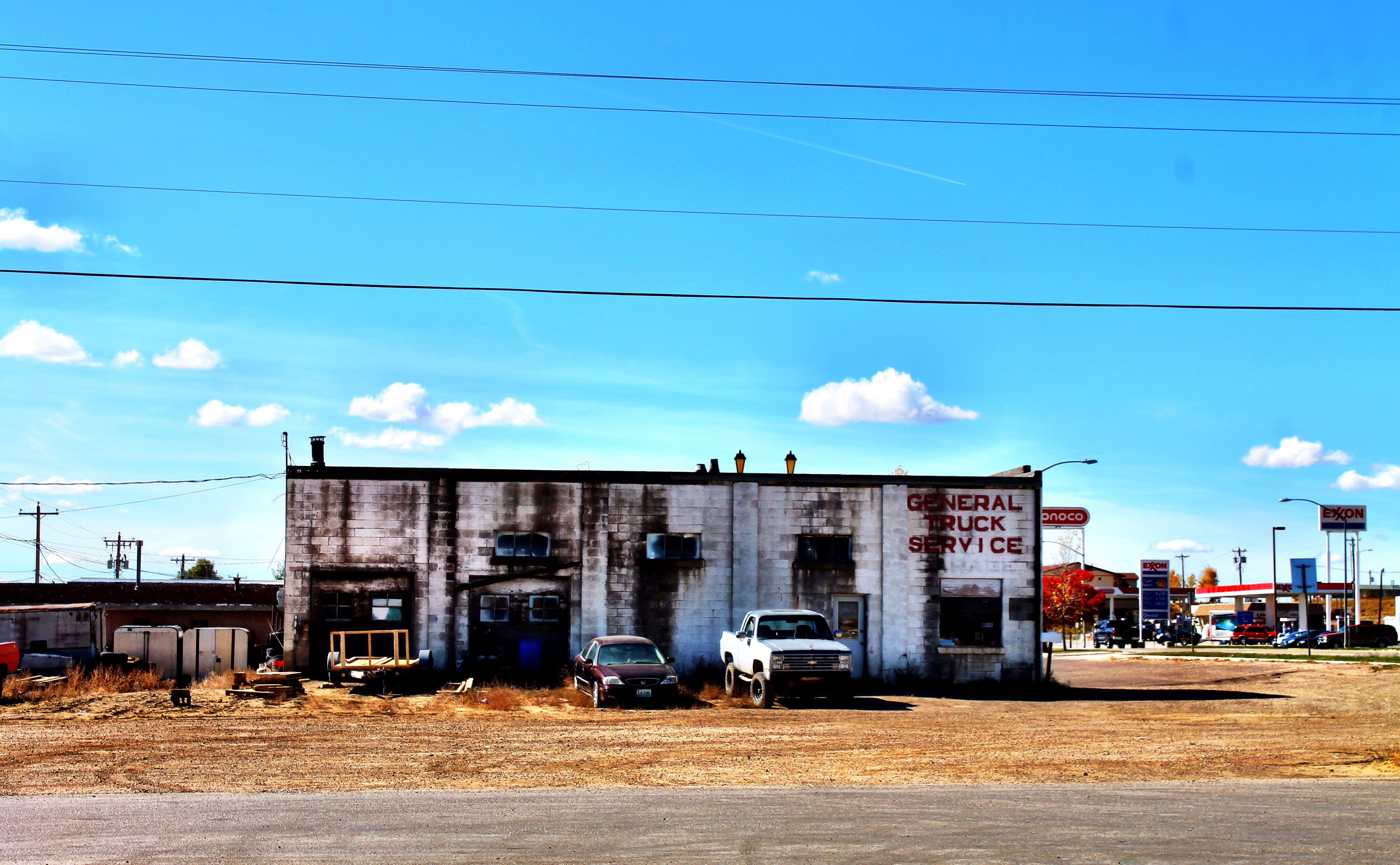
Occasionally, an ancient barn will crumble by the roadside. Next to it, the new one, the house built in the years between the two. Occasionally, next to it, nothing but land, nothing but the hills, and the freeway, nothing but these dilapidated remnants of America’s agricultural past. Sometimes, the remains are of a cabin, no town near, no river, no….nothing, but the skeletal remains of Manifest Destiny’s westward expansion and the casualties that came with it. Dead dreams by the side of the road. Road kill of a different kind.

And then a car on fire, fully engulfed in flames. And then a strip mall: Kohl’s, Best Buy, Starbucks, Target. You could be anywhere, but you are here, wherever it is. Soon it is southern, eastern Idaho, northern Utah, the Snake River cutting deep through high dry mesas, creating a fertile green farming valley. Somewhere, the rock is volcanic, black and sharp, and then everything is red, rust-colored. Out 80, into the mountains, the snow fences begin, lined up and waiting for the weather to come like a farm of solar panels waiting for the sun.

image

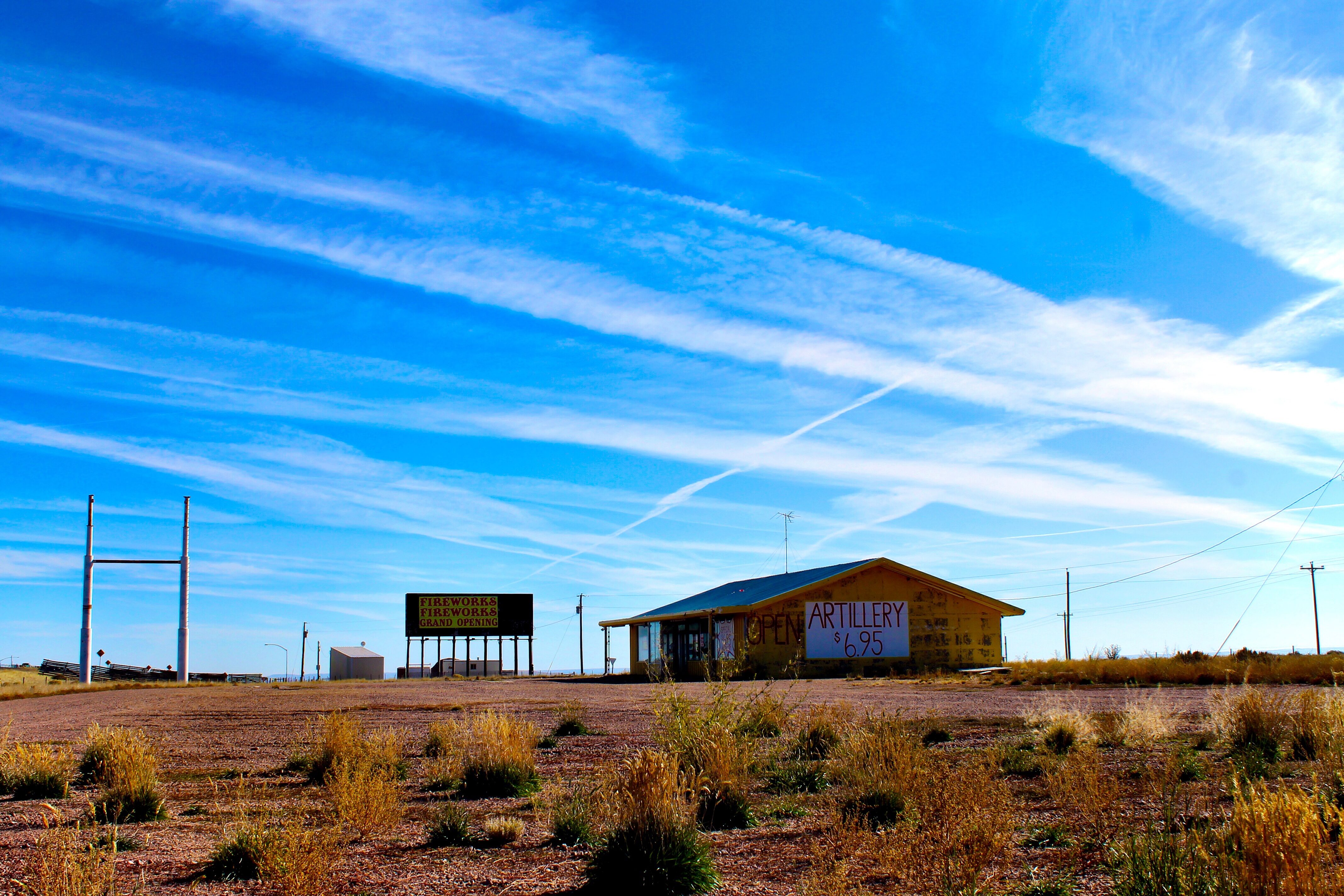
And then Wyoming. Wild, wonderful, heart-breakingly gorgeous, with the green aspen turning gold and the black trunk of cottonwoods striking out behind yellowing leaves, along the riverbeds, up the valleys between hills. Trains snake through the canyons, hug the red-rock cliffs, slither low on the prairie behind the scrub brush and sage, carrying the loot of virgin land. They fade into the distance the same way Vernita Falls faded behind you, the same way the distance fades into fall – nostalgic, fogged over, waiting for weather to come.

image