On the Road

7 Steps to a Better Road Trip

Road Trip! 

I was westbound on highway 60 in Arizona, between Wickenberg and the 10, when a friend texted to say he was planning his first ‘significant’ road trip, and wanted to know what tips I could offer. I’m a little late in responding, but he called me an expert, so I feel obligated to take his request seriously.

I’m picking a lucky seven of tips because road trips shouldn’t be ruined with too many rules. I’m on the road again when writing this, this time in the Eastern Sierra; I adhere to all of these, and they’re still working for me.
012c6aae4b270b26e7793775155e934133c20abdc4   1. Use a Map – The Old School Way

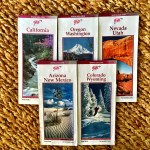
Los Angeles is huge, and I’ve caved to using Waze to get around it. It’s an excellent tool, and a damaging crutch. As a result of my GPS-addiction, it’s taking me much longer to get to know LA than it would have in the old days, when I looked at a map – you know, a paper map – before leaving home, and wrote down directions. It was a method less adaptable to changes in traffic flow, but a great way to get to know the place where I was driving. I’m not saying buy a Mapsco of the entire USA, but don’t be afraid of an old fashioned map to chart your main route. It doesn’t mean you won’t wander off of it. It simply allows you to see the overview of the geography you’re entering. The lay of the land around the road that you are on.

01defdf2eeae2e4c86b5466c67a19ea33c56e807c5   2. Take the Blue Highways – The Journey is the Joy

On an old-school map, the less developed roads, those more rural, but still paved, were blue. The notion of sticking to these was made famous in William Least-Heat Moon’s book of the same name , which chronicled his journey on the small roads of the USA. Depending on time and distance, it may not be possible for you to stick to these completely. Honestly, it may drive you crazy, and be horrible advice. But if you wanted the fly-over approach, you’d be in a plane, not a car; interstates, bless them for what they give us, are the fly-over drive. The reality remains that most of America happens off the interstate. Admit it, when you are driving a stretch of I-40 that bumps up against the old Route 66, you want to pull off the highway and hop onto that crusty, weed-pocked stretch of broken asphalt, for nostalgia if nothing else. I say: do it.

018d9c9d31045a3a3078a37737c86e80dfde09fa76   3. Revel in Kitsch

Whether you are on an interstates or a dirt road to some historic monument, revel in the kitsch at hand. It’s everywhere, and it’s AWESOME. Ever seen a sign for Wall Drug? If you’ve driven on I-70, I-80, I-90 west of Chicago, or trekked the Everest circuit, you’ve seen a sign, or a sticker, for this place. Maybe you missed Wall Drug but made it to Little America, smack dab in the middle of Nebraska. Maybe you’ve visited the Biggest Ball of Twine (a goal I’ve yet to achieve – and there’s a dispute about who really owns the claim), but you saw the largest red pepper or the Corn Palace. These are the big guns, but the little ones, the ones that truly flavor the road, are even better. Stop for gas on the Navaho reservation and buy a dream catcher. Stop at the meteor crater in Arizona and see where NASA trained astronauts to walk on the moon. Taste the fudge at some olde time candy shoppe by the road. Buy magnets in the shape of the states, or patches from all the national parks, or a random trinket from Teapot Dome. Steal a street sign with your name on it. Actually, don’t do that; it’s illegal. The line between history and kitsch has something to do with nostalgia, is very blurry, and should be entirely entertained at as many roadside stops and historical points of interest as possible.

0102adf4de263a6d41ed6e429af278aa087ad8f81d   4. Listen Local, Read Local

There is no better way to learn a place than these two things. Local radio, even if it’s being pumped in by syndicate from far away, gives you a great taste of where you are. When I moved to Dallas, I found there are no fewer than seven Christian stations on the FM dial. One trip across West Texas, I listened to AM radio, half of it in Spanish, for about 100 miles out of El Paso while literally watching tumbleweed roll across the highway.  Last week, driving out of LA, I listened to Rush Limbaugh on a local station. You don’t have to like everything you hear. But it helps understand a place to know what they may be hearing. Similarly, local papers are the absolute best way to learn what’s going on where you are eating lunch, spending the night, or pulling off the road for a hike. They’ll tell you who’s in office, who’s trying to get them out, and who got arrested last week. They may also tell you what music or food you must not miss in town.
0140f292c44437a0b9c943d3289d0d78668f97fab0 5. Eat Local

This is a no-brainer, and it’s easier than ever, with every small town sprouting a brew-pub, and every small town diner being covered by Anthony Bordain or that Diners, Drive-Ins and Dives dude. Don’t rely on Yelp. It’s a construction. Ask at your cheap motel, your campground, the local bar where you may have stopped in for a drink. A bartender always knows. Whether it’s frito pie, pozole, philly cheesesteak, or a farm-to-table mesclun salad with a seared farmed ahi tuna steak, it’s going to be better when someone in-the-know recommended it to you. Asking a local for a recommendation is like attempting to speak even crappy Spanish in Mexico: people will be pleased that you care enough to engage at all, and the help will flow from all directions.
01eec584a78fa402bf771b59c21e65c633b2b9ae6c   6. Let There Be Fritos, Cheetos, and Doritos

So yes, eat local, but let’s be serious, you are on a road trip, and there is a food situation that goes with that. It is frequently one that is accompanied by Tums, and that’s ok. I drove across country one summer with a lactose-intolerant friend who insisted on eating a DQ Blizzard every day, at least once. I got so tired of pulling over for DQ while craving a Slurpee, that I made him go into a Circle K in Arizona and ask where the nearest 7-Eleven was. They told him to keep going straight (we were on I-40) until he got to California. Likewise, my college boyfriend and I had a rule that, if he tried to get me to eat Cheetos or Peanut Butter Captain Crunch for breakfast three days in a row, I was allowed to kick him out of the car. That said, I have enjoyed my fair share of drive-thru fries, drive-up cranberry lime-ades, over-sized gas-station Chewy Sweet Tarts, and a flat of raspberries or strawberries bought by the side of the road, and you should to

IMG_6238   7. Talk to Strangers

I know our parents taught us not to, but you’re a grown up now, and you can make your own decision. Talking to strangers – and, more importantly, listening to them – is one of the absolute hands-down best parts of a road trip. On my way to Joshua Tree a couple weeks ago, I stopped off at PioneerTown (see number 3, above) and had a great conversation with a guy named Rick who lived there. While Spanky made friends with his Jessie May, Rick told me the story of the etched silver Native American figure pin attached to his well-weathered hat. Turns out Cecil B DeMille had given it to his clairvoyant Mohegan grandmother when they sat next to one another on a flight. Last night, outside a bar and pizza parlor in the Sierras, I met a private pilot for a wealthy family who regularly flew them between their 12 different homes in the US and Mexico. The night auditor at a hotel I stayed at in Dallas, TX was a descendent of Quanah Parker, and I met the two jokers above at a temple in Burma, and traveled with them for a week. The possibilities are endless, and endlessly joyous.

The truth is a road trip is all about your attitude. My car no longer has functioning cruise control, which leads to right leg cramps on long trips. The seat is starting to collapse, which sometimes makes my back hurt. I could let these things bother me, but what’s the point? I’d rather find the local country station, slide the window down to let in the sweet smell of spring blowing off tree buds while I sip on a lemonade purchased by a road-side stand. Whatever your attitude, do one more thing: wear sunblock on your window arm. If you do nothing else I recommend, I promise you will thank me for this one.

01ac254b41f8cce7de1e17c98b761ef5afa85d9865

Life Skills, United States

The Importance of Feeling Small

I’ve been thinking a lot lately about the importance of feeling small. We tend to think of it as a bad thing: feeling “less than” others. Feeling unimportant. Feeling hidden. But there is another aspect of feeling small. The one that allows you to feel the mighty wonder of something else. To feel small against it, and in relation, to feel its power, and relocate our own.


I suppose this may sound like a religious sentiment, and ironically, I’m writing this on Easter. But I’m not a religious person. I get my feeling small from being out in nature, and I love it.


I started contemplating feeling small in October, when I was traveling through Utah. Newly reunited with the dog after a year of separation, I was generally gleeful, and grateful, but I was also venturing to a new territory and a major life change: living in LA, looking for a job, staying in one place.


Spanky and I set out on a couple of hikes – two in Goblin Valley State Park – in Little Wild Horse Canyon, where we had to stop after a mile or so because poor Spanky couldn’t scale the narrow sandstone walls, and out the Curtis Bench Trail, where we wandered among hoodoos and I contemplated how similar they were to the fairy chimneys of Cappadoccia, and marveled at the amazing things that Nature creates. The next day found us in Escalante, heading toward Lower Calf Creek Falls on a sandy trail through a valley where fall foliage danced in the sun. Turning a corner the last quarter mile before the falls, the temperature dropped at least fifteen degrees and we were met with a cool wind, and then a misty spray, and then the falls themselves, rising 100 feet up a cliff of reddish rock. We stood small against it, had our picture taken, lapped the cool water, and wandered back toward the car tired, happy, refreshed.

IMG_7707


From there, we made our way to Devil’s Playground to watch the sun set. The unpaved Hole In the Rock Road stretched ten washboarded miles into unblemished Utah, depositing us in a playground of rock formations that look almost like sand towers and the waves that break them. Spanky was nursing a bloody foot pad from two excited days of pantering through the sand, so we kept our wandering to a minimum. I sat him in a stay while I climbed around and recalled with joy the sense of adventure I’d had all over the world at similar sights – formations of natural origin so astounding in sight they seem otherworldly, which reminds me, always, how magical the world really is. And the lookout from that place, out on a valley of alien sights, familiar to me because I had seen something similar a world away, and new and strange here in my own country, made me feel so wonderfully small, so thankfully little in comparison to the magical mastery that is Nature.

IMG_3573

This week, today, April 5th, marks one year since I flew back into the United States, after visiting 17 other countries. Lately, in Los Angeles, looking for the place where I fit and the job that I can both master and enjoy, I have on occasion felt small in the bad way. The way that makes one feel inconsequential, unnoticed, not fully worthy of the wonder that surrounds and as a consequence, less capable of seeing it, even right there in front of me. It is a great reminder to put myself in the place where I feel blissfully small, and so it happily coincided with plans to hit the road.


Which is how I found myself in Joshua Tree National Park for the first time. Dogs are not allowed on trails in the National Parks, so Spanky and I wandered on dirt roads around Hidden Valley, again staring up in wonder at stone formations – Intersection Rock, of climbing fame, and Skull Rock, of tourist fame. We drove south to the 10 through the cholla patch, the cactus flowering around us, the sacred datura blooming in treacherous, ostentatious piles by the road side. The ocotillo waved red paintbrushes up at the sky. And the Joshua Trees, of course, scratched up at its surface.

Ocotillo2


JoshuaTree2


Cactusbloom2


And then here, to what could easily be considered a Phoenix suburb, where an easy morning hike puts you up against a hillside of cordon cactus, one of which is older than my great grandfather would be, were he still alive. . And 30 feet tall. There was a cautionary rattler sunning itself by the creek, whose watertable is now starting to retreat to its summer home beneath the ground.

01b54cabdfeb6db635f71e7ac01c5b9912af50c3f3


At night, the same trail by moonlight has a different face. Cool breeze through the wash, red-spotted toads hopping across the footpath, which you take more slowly in the dim brilliance of the full moon. No headlamp. Just Nature’s magnificence to light your way. And still, you can make out the outline of the giants, standing tall, prickly, resilient among their history, making you feel small in the best of ways. You shrink beneath them, and you feel closer to the ground. Grounded. Your problems less insurmountable. Your place potentially still unsure, but certainly less tenuous. Your place, here.

01f5a2db9968009171e3fbe53e415bbd37ac0b2831

Dallas

The Story of Hanna Rigler

It seems only appropriate, with Passover coming next week, to share the below.

I was in Dallas briefly at the beginning of March to celebrate some fantastic ladies who came to Paris to meet me for my birthday last year , and a friend invited me to go with her to the Holocaust Museum. I’d never been, in the whole 8 years I lived there. How could I say no?

IMG_0804

With Fantastic Ladies, In Paris


The special exhibit at the museum right now is about the flight of Margret and H.A. Rey, the creators of Curious George, from Paris to Brazil, and then the US, during WWII. The truly special exhibit, though, was this woman:

Hanna Rigler

Hanna Rigler


This is Hanna Rigler, also known as Sarah, a Lithuanian Jew who survived a ghetto, a camp, and a harrowing escape, which she wrote about in her book Ten British POWs Saved My Life. The following is what stuck with me after listening to her talk, and speaking with her afterwards.


_____________________

The men were mostly gone by the time they came and took the children, during the day while the adults were at work. The old people, and the children. Imagine: coming home to find your children and your parents gone. Your children, whom you had birthed and nurtured and then guarded when you were moved from your neighborhood, your own home, to this ghetto. Your parents, whom you had guarded, as well, as they aged, whom you fought with, disagreed with, loved, cherished, appreciated because they watched your children so you could go get what little work there was to be had, what meager money to be earned. And then to come home and find the building empty, the family gone. This, no more:

Matuson Family

The Matuson Family (Hanna’s Maiden Name)


But like you say over and over, you were lucky. You were lucky, and it makes all the difference. You were too young to have a family yet. You and your sister had found work, cleaning and cooking in an official’s house, so you were not at home when they came to take you. So when your mother came home, she didn’t see what others saw: the vaccuum. Instead, she saw you. The fate of everyone you knew – all your friends, their families – the elderly, the young, the men: unknown. There would be little time to adjust to this demographic shift; soon, they will be coming for you.

They will come for you and what is left of your family – the mother, the sister. They will put you in the cattle car of a train, in Lithuania, in July, where the heat makes its way through the wooden slats of the wall but the air is nowhere to be felt. The lack of air presses down on you like the bodies of too-many people shoved in next to you. The smell of the one bucket you all share in a corner will bear on you too. You will think it is too much to survive, but you will. You will travel like this for days – seven days, nine days – who knows how many? And when you arrive, you have only just begun.

You will be given a number.

There must have been number 1. By the time they get to you, the number will be greater. It will be 58386, and you will wonder where everyone has gone, because when you arrive, the camp will seem empty, except for the shoes. The shoes pile high. They will pile high long after you are gone, and bear witness to the 58,385 pair of feet who walked through the gate before you.

There is a rumor that the Red Cross is coming to visit POWs, and so you will be kept alive, for now. Soon, when the threat of freedom comes, the marching will start. You will be lucky, and get a coat. It will be a bad coat, thin, and you will have no choice but to wonder to whom it used to belong, and which pair of shoes from that pile were also hers, but you will wear it as you walk away, moving in front of the front.

You talk about the unpleasant things. You will mention, to catch the attention of errant school kids, the hunger – how the coffee you got was really water; how the soup was water too, with just a little cabbage; and how the one small bread was meant for ten people and never enough, and yet you lived for the bread. Or because of it. You will tell the children how you would swear that if you had enough bread to eat, you would never want for anything else in your life, save for maybe a piece of potato on top as a delicacy. In this gluten-free paleo generation, they will fail to understand why you could want such a thing.

You will tell the children you know it isn’t nice to talk about, but when you don’t wash, when you can’t bathe, the lice come and so you all had them, on your skin, making sores, quite ferocious. The children will be texting on their phones in the back row. You will tell them how your numbers dwindled to 500, from thousands, because anyone who couldn’t walk was shot and left to rot on the roadside, and anyone who was eating only coffee-flavored, or cabbage-flavored, water can’t walk hundreds of kilometers through Poland in the winter.

The children perk up a little when you tell them how you tried to trade a diamond watch your mother had buried for some bread, and how, having accepted the trade, someone returned with the police instead of bread. They chased you around town, a posse with pitchforks shouting, “yude! Yude! Yude!” They hear you a little better when you say you don’t mind if you are killed. Even though you are barely a teenager, you don’t mind this being the end – but you just don’t want your mother and sister to have to see it.

It sounds more like a movie they have seen, when you tell them about the chase, about hiding in the barn for three weeks, amongst the hay, in a feed trough, fed from time to time by the British POWs you credit with saving your life. When you say, pressed for time to wrap up your lifetime story in less than ten minutes, that the Russians were not a very nice liberating force, that they raped the women and that again, again you were very lucky, their disappointment is palpable.

When it is over, they ask almost no questions. They are about the age now that you were then, a continent and a half away, a lifetime removed. They hear you say it again, “you had to be very, very lucky to survive,” and they don’t see their luck is in geography. They don’t hear you, afterward, when you share, “these children, they know nothing. In New York they know everything. Here, nothing.” And is there nothing left for us to do but thank you, hold your hand and thank you, and walk way. Another group is coming in, and you have your story to tell.

Hanna and her sister Sarah, before the war

Hanna and her sister Sarah, before the war

Life Skills, Los Angeles

Why Next Year, I’m Celebrating Purim

I’ve never been much of one for Halloween. But next year, I’m celebrating Purim.

I know they are totally unrelated holidays, one about paganism and the other the triumph of a people over oppression. But they are celebrated in very similar ways: costumes and candy. Let me leave my sugar addiction out of this and focus on the costumes.

I’ve never been much of one for dressing up in a costume. Maybe it’s the pressure of creating the complete alter persona, when my personal persona already felt like an act. Maybe it’s the act of acting, which seemed disingenuous. It could be the subtle but persistent undercurrent that “slut” was the way to go – was it the easy way out? Was it a latent desire to be slutty? Maybe it was the tension between my inner feminist and my inner fun-lover that never liked looking that one in the eye. Maybe it’s nothing more than a simple lack of creativity.

I took a break of more than a decade between Halloween costumes. Between my first year in grad school – when I hastily ironed glitter letters spelling “Princess” on a black t-shirt and donned it with a tiara to hit 6th Street in Austin:

MBAHalloween1

– and my last year in Dallas when I got caught up in the infectious spirit of friends who live for Halloween and Mardi-Gras, and told me I wasn’t allowed to their annual party without a costume, which sent me on a spiral of craftivity that resulted in a “Toddlers in Tiaras” getup

Toddlerintiarapose

(a failed one, I confess – most people thought I was just trying to be a beauty queen), I spent most Halloweens pretending not to be home.

I marvel at pictures of my friends who go all out for these occasions, and I can’t get there. Is it competition? Is it confidence? Whatever it is, Purim is sucking me in.

I live in Hancock Park, a neighborhood of Los Angeles that is predominately Jewish. Very Jewish. Forelocks and overcoats and wigs on the women Jewish. Families walking to temple on Fridays and kosher grocery closed on Saturday Jewish. Last night, the world erupted in firecrackers that sent my dog running under the couch, trembling. And this morning, the world is alive in costumes.

In the two miles I just walked, I must have passed 100 people in costume. Only one was dressed like a cheerleader. None was dressed as a slutty nurse. Many were clowns with rainbow hair. One young boy was dressed as a fat yuppie, stuffing overflowing around his belly so that his plaid shirt bulged above the belt holding up khaki pants, and a false butt bugged out beneath them. I saw an astronaut, a ninja, a baker, and an Haredi who had rainbow-striped his shtreimel (his big, round, fur hat, disrespectfully analogized to a lampshade – see below), so that it looked as if he wore a circus tent on his head. The award-winner, to me, was a group of five multi-aged siblings dressed as newsboys from the 30s, complete with knickers and caps. That is, not counting the Mustang convertible of young men in kippas that I saw pulling out of a temple parking lot – but I think that just happened to be how they were rolling this morning.


Shtreimel

Shtreimel

Because today is a holiday, all these young people were out in the neighborhood, many going between two bounce houses set up on the front yards of their apartment complexes. Remnants of confetti lie on the sidewalk, sparkling in the morning sun, and boys run around blowing plastic horns. It is a holiday about joy, and creativity, and perseverance. It is a holiday that celebrates one woman, her honesty and her bravery. And maybe some revenge.

I’m not sure whether it’s the creativity, the community, or the history of Purim that has me intrigued, but I’m already contemplating outfits for next year. And French maid is not among them.

Moving, United States

Digging In

Transition is an amazing thing. An amazing, exhausting, thing. It isn’t a hibernation. It isn’t a caterpillar-to-butterfly transformation. You don’t go into a cocoon and emerge beautiful, powerful, and able to fly. It is a piece-meal business, changing your life. It happens bit by bit, in unnoticeable ways. You dig in. That’s it. You just dig in.

Right now, for me, digging in means settling in. It is the exact opposite, and yet very similar to, digging into traveling. Rather than finding my rhythm in movement and planning, I’m finding rhythm in planning stillness. I’m looking for a home, and a job, and a routine. I speak the national language in Los Angeles (sort of), but it is just as new to me as a foreign country, and even small things are as big an adventure as they would be in a foreign place. And they involve a big adventure’s worth of energy. To buy yogurt and apples, there are ten decisions to be made: grocery store or farmers market? Which grocery? Which farmers’ market? How do I get there? Where do I park? What city am I in and what is their policy on grocery store bags? You make the same exhausting mistakes you may make on a foreign adventure, like accidentally going to Trader Joe’s on a Sunday afternoon. If you’ve seen the Whole Foods Parking Lot video you know what I’m saying. I’m not saying I did this…just….it would be a mistake.  So is buying frozen food on the night of the Hero 6 premier if you happen to live two blocks from the Chinese Theater. I find myself watching an inordinate amount of television and it bores me, and then I realize I need boredom, since I can’t even drive to a grocery store without gps assistance. Boredom can be bliss when newness is exhausting.

I quickly learned to use Waze instead of the map on my iphone. It’s a cross between the blessing of crowdsourcing at its most amazing and a horrendously distracting video game played while driving. I’ve learned that a Prius can take up two lanes, just like a dually, despite also being able to drive underneath one. I’ve felt compassion for people spending money on Panameras, because good god where can you drive that thing the way it’s meant to be driven in a place where traffic never goes more than 65 miles per hour? I’ve absorbed that driving rhythm in LA is: fast as you can (50-60) on a surface street, slower than molasses on the highway. I’ve learned just how long it can take to go 2.1 miles. And I’m disturbed, but not deterred.

Apartment hunting in Los Angeles is like apartment hunting in San Francisco in the mid 90’s. Every place I go has eight people lined up waiting to view it. Spanky being over 15 pounds greatly reduces one’s housing opportunities. I’m glad I started looking at options online in August, because I had two months to train myself not to throw up on the spot when someone tells me a small one-bedroom with no laundry, parking, or upgrades, but in a great neighborhood, goes for over $2000/month. And I’m thankful for all my presentation skills from business school (and for that one a-hole professor who liked to interrupt up in my face with questions during presentations) because I talk a great game around not having a job, yet still feeling sure I can pay rent for the next 12  months.

After showing up 20 minutes early to every apartment in which I was interested and sitting on the stoop, bank statements in hand, I found one by lucking out. I called about an apartment that of course had been rented the prior day, but discovered that its identical twin had just notified the landlord of a January vacation. The owner (who told me he probably liked me better for having quit my job to travel, than asked me what my sign was and was relieved to hear I was a Pisces, because none of his crazy renters had ever been Pisces) approved me for a preview showing, and I took it on the spot. It’s in a quiet neighborhood where I’ve been warned against going to Trader Joe’s on Friday afternoon because the Hasidim are packing it full in preparation for Shabbat, and I can walk less than a mile to a great segment of Melrose, or to some decent bars on Highland. I get keys on the 8th, right after returning from purging my storage unit and turning my remaining belongings over to a mover.


Anybody need a chaise?

Anybody need a chaise?

What you are gifted when the prior tenant is a set designer. It comes with an apology because it's not to scale.

What you are gifted when the prior tenant is a set designer. It comes with an apology because it’s not to scale.


The weight that comes off from knowing I have a home is amazing. I’m light as air. It gives me energy to rework my resume and find an internship, where, because it’s California, they insist on paying me minimum wage so they don’t get sued over my slave labor. I was concerned this would hurt any unemployment I would potentially take in the near future, until I remembered that I haven’t had a job in 18 months, so my unemployment check would have been $0. Minimum wage is a step up.

The internship is with the production company for an awards show. I will keep my lips sealed on any luscious details except to say that a 9:30 start time, two kitchens stocked with everything from fruit to candy, and a bathroom so pristine that more than once I’ve been the first person to use it in a day are a far cry from my former (and likely future) life.

Here’s a visual aid of what I’m up to for the next couple months. Details to follow as life gets interesting, and my address gets permanent.

oscar