Asia

An Unquiet American

I consider myself a patriot. I shun jingoism and frequently voice discontent with my mother country, and appreciate that I am allowed to do so specifically because I’m a citizen of the United States.

Patriotism isn’t blind. “Love it or leave it,” a refrain I have actually heard in conversation, is a simplistic approach to something as complex, diverse, young, and unsettled as the United States.  I am not a patriot because I believe the US is better than every other place on earth; I am a patriot because it is my place. I accept its flaws like I try to accept my own, and just as I do with myself, try to improve what I can. In fact, part of what made me get up and see the world was the sensation that I had given up on us: I had disengaged from the act of improving my community, challenging my leadership to do better, or encouraging my country to rise above….well, everything. I was stuck in a rut of ‘oh well,’ and I needed to climb up out of it.

Being a patriot makes Vietnam a complex destination for an American. It isn’t a playground like Thailand, or a temple-stunned wander like Cambodia. It is a walk through an unresolved part of the American psyche, brought to life in the landscape in front of you.  Every time I looked at a row of rubber trees or the magnificent islands rising out of Bai Tu Long Bay, I felt like John Cleese in the episode of Fawlty Towers in which the Germans are coming: I couldn’t not think about the war. I couldn’t not see American planes lighting up the horizon with napalm. I couldn’t not feel guilt.

IMG_7647

But guilt is simple; Vietnam is complex. The Communists have infused Vietnam with their own brand of patriotism. You don’t even have to ask the question, and you will get the same party line. “We like Americans. We don’t blame them for the war. We blame the imperialist American government.” It’s the same rhetoric William Broyles got in 1983, when he went back to visit the Vietnam he had fought in, a trip he wrote about in Goodbye Vietnam. It is still being used today, by people wearing North Face jackets and New York Yankees hats.

It isn’t that Vietnamese don’t have opinions. It’s that there are few ramification-free opportunities to express them. As a result, you get a party line of behavior, not just speech.  On my way to visit the Ho Chi Minh mausoleum, I found my map indicated I could walk through what turned out to be a defense department complex, closed to lay people.  While I was still ten feet from the guard I wanted to approach for directions, he pointed his finger at me, said, “YOU!,” clapped his hands twice and then crossed his forearms over his chest in an x, indicating I was not to pass down this road.

IMG_7527

A firm believer in tourism diplomacy, I suppressed the temptation to laugh at such an out-sized gesture and  kept walking toward him. He repeated his pantomime twice, and when I got close enough to speak to him and gesture – this way? That way? – he looked over my head, refusing to acknowledge my request – or my presence.

In America, publicly at least, we are raised to believe our opinions matter. It’s why tourists who get themselves in trouble are famous for saying, “you can’t do this to me, I’m an American!”  The instinct shouldn’t be that we are Americans and therefore entitled to better treatment; the instinct should be that we are human, and entitled to equality. All of us share this innate desire to be respected and heard. Communism takes the notion of equality far beyond balance to a point where there is no ‘one’s’ opinion; there is only the party.

The Vietnam War is of course not called the Vietnam War in Vietnam. It is, “the American War of Aggression,” or, “the Struggle for Unification of Vietnam.”  While everything from museum placards to memorial brochures is hyperbolized  ad-nauseum in defense of the Mother Country, it is impossible to deny the basic validity in the point of view, and in looking at the experience from the other side.

IMG_7439b

At the same time, the propaganda is infuriating. And unsettling. As someone  who wants facts in order to form my own opinion of a situation, how am I to determine what is real, and what is wording? If there is a continuum of truth with the NVA on one end and the US on the other, what lies appropriately in the middle ground?

Each site visited, each conversation, is an exhausting dissection of words and ideology, with no final verdict as to the accuracy of any hypothesis.  You can visit the Hanoi Hilton, and most of what you’ll see will be about the French colonial oppression of the Vietnamese. At the end  you will see two small rooms about captured American pilots playing ping pong, decorating a Christmas tree, and going to church. You won’t see the beating Edwin Shuman took when he fought to get the right to Sunday worship.

So what is an unquiet patriotic American to do with all of this?

Become still. Allow it in. Stand on a corner and watch the million mopeds zooming by. Watch the elderly exercising by the Lake of the Returned Sword, and the young people canoodling in its parks. Don’t be tempted by frustration; breathe through it.  Absorb the difference, and let it inform you. Your own opinion will come. It will be uncertain, hesitant, and entirely yours.

For more pictures of my time in Vietnam, click HERE.

IMG_7617

Asia

Just a Little Bit of History Repeating

I like to believe I would stand up to injustice if I saw it perpetrated in front of me.  In the abstract, as a notion of future behavior, I’m sure of it. But when that abstraction becomes a reality, what will happen? If standing up means risking my safety, potentially my life, what will I do?  How great will the stakes have to be before I commit, and potentially make no difference?

History is nothing more than a series of human events, and it faces the same challenge: as a future abstraction, it seems so clear, but things change when present tense pulls them into focus. As they move into the past, and we are forced to interpret our behavior,  we seem as confused about what our actions mean as we were when we made them. So much for hindsight being 20/20.IMG_7042

The world is full of atrocities. Some of them – like Nazi Germany, or the genocide of Native Americans – are our past, and others – Rwanda, Sudan, Syria – remain our present. Despite the argument that we learn from history, we have a bad case of déjà vu with genocide.  As communities, as society, we take years to recover from the crushing blows of our own ugly humanity, and some would argue we never do.

IMG_7084

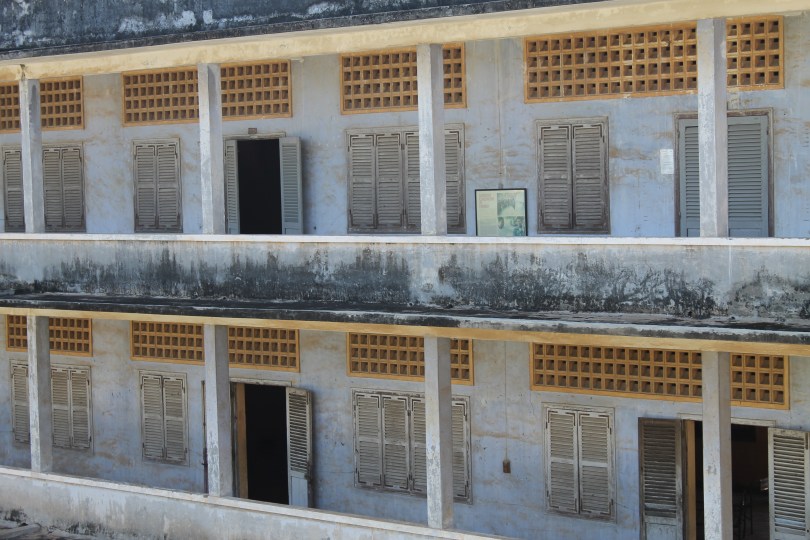
In the 1970s, Cambodia suffered one of the most appalling genocides in recent history, and following it, things sprang back to life amazingly quickly. Depending on what propaganda you read, the Vietnamese either liberated or occupied Kampuchea from the Khmer regime, in January 1979. During the ten years between ‘liberation’ and the withdrawal in 1989, the UN and most of its developed member countries were still so uncomfortable with Vietnam politically (following the expulsion of the French and the Vietnam War) that they continued to recognize Pol Pot as the Cambodian leader for over a decade – this, despite the fact that in less than four years, he had masterminded the execution of three million people – almost 40 percent of the Cambodian population at the time.

IMG_7159

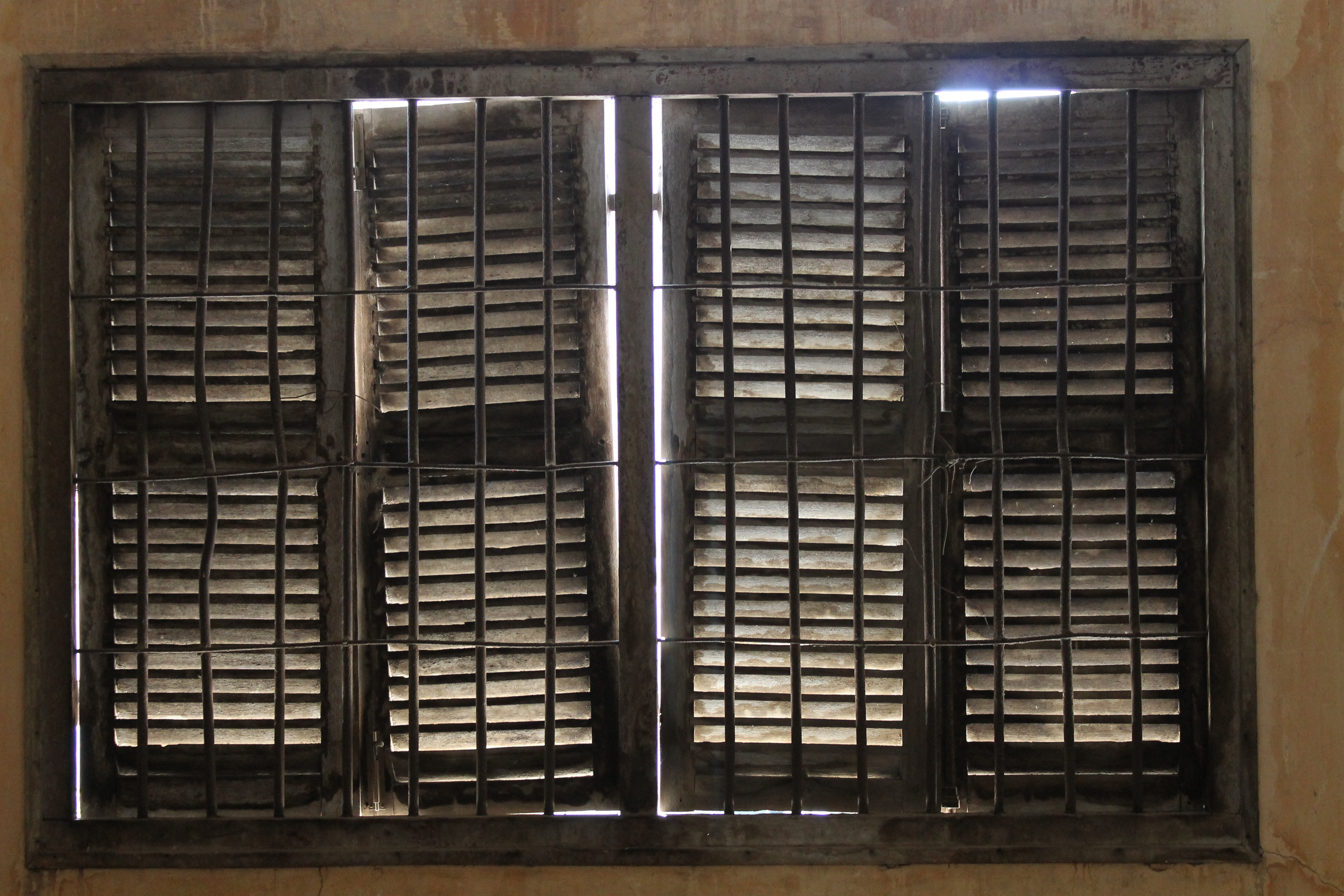
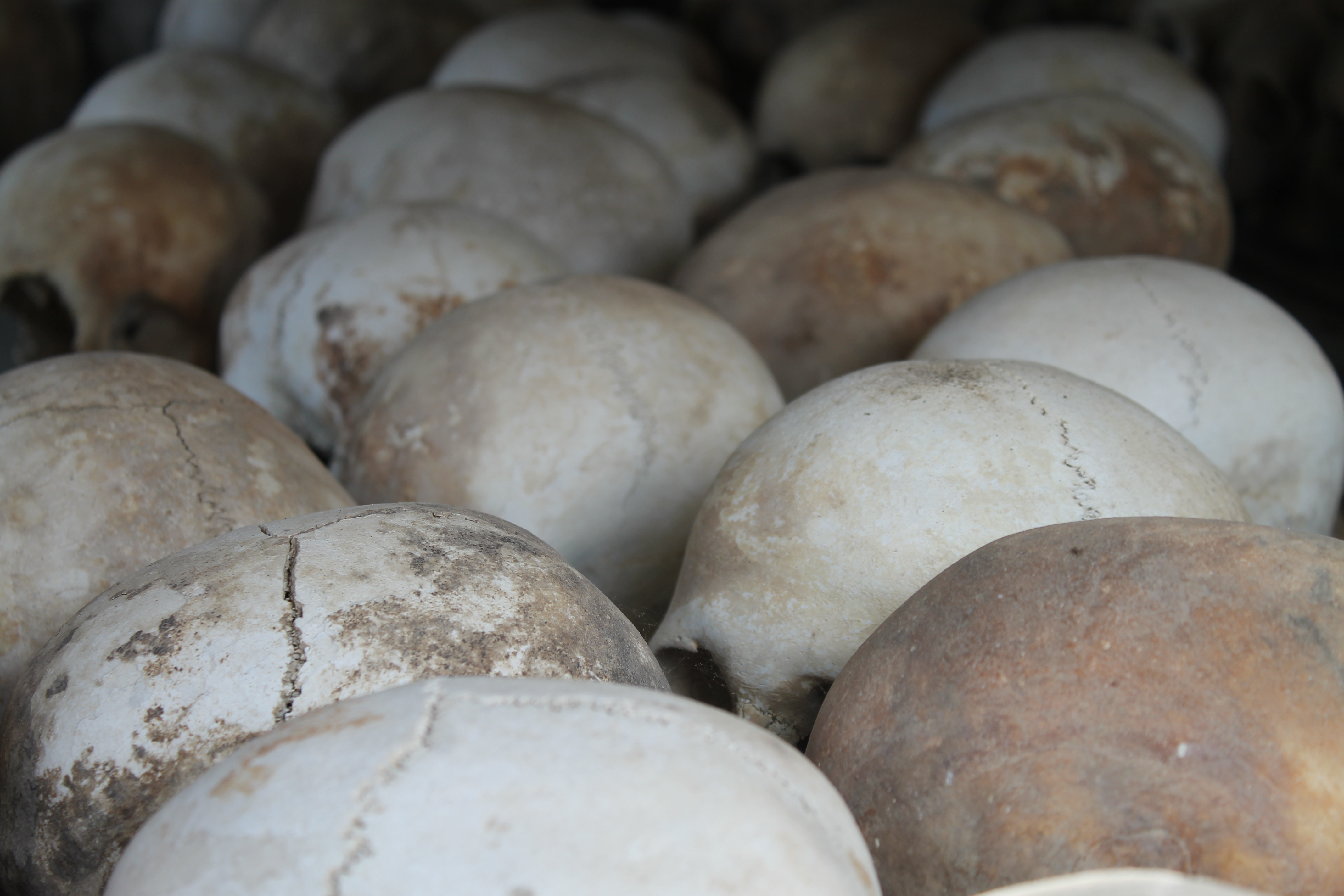
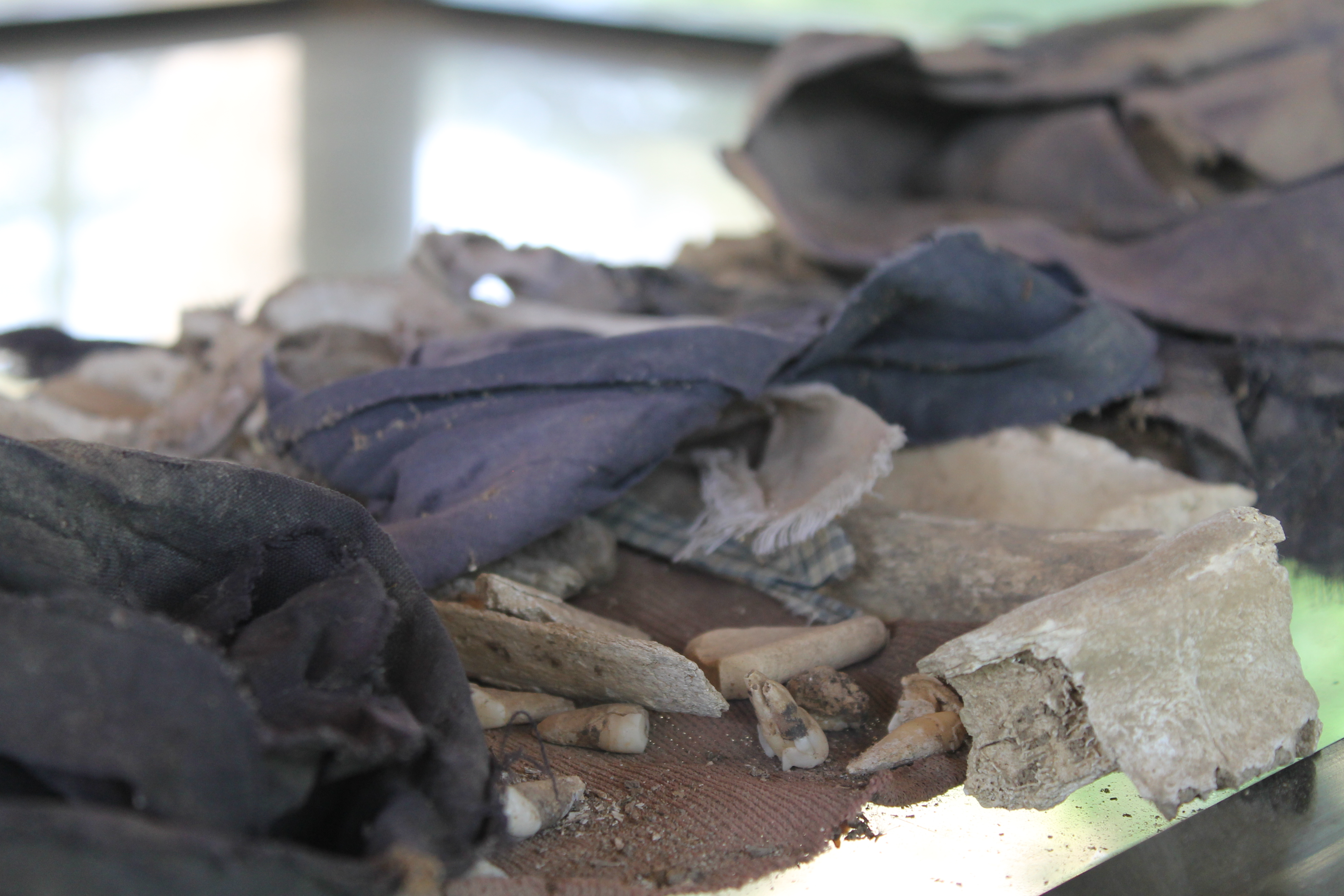
Cambodians themselves wasted no time moving forward. Immediately following liberation, people flocked back to the cities from which they had been driven. They took back their streets and buildings from the vines and bushes that had quickly grown over normal life in its absence. Fewer than ten years after Pol Pot had been officially removed from power, Tuol Sleng (or S-21), the Phnom Penh school that had been converted to a detention and torture center, was being preserved as a memorial. Turning Choeung Ek – better known as the Killing Fields – into an educational memorial took only slightly longer. This despite the fact that when it rains, the ghosts of the dead still rise from beneath its earth in the form of teeth, bones, and fragments of cloth that must be collected and placed with their proper group of relics. It’s as if history takes advantage of the rain to remind you it can’t be buried.

IMG_7142

What I found remarkable in Phnom Penh was the honesty with which the Cambodian people stare this ugly truth in the face. Pol Pot was arrested in 1997, and he died a year later. Long before then, survivors and killers alike had given testimony about creative methods to save bullets in the killing fields. The farm implements that professors, doctors, and artists had been forced to use in the fields were used to bludgeon them to death when night fell. The fronds of palm trees that occasionally provided shady respite were torn from their trunks and their spiked stems became the perfect blade for slitting a throat. DDT powder that helped cover the stench of the not-yet-decayed had the added benefit of killing anyone buried alive. Survivors testified about the loudspeakers hung from a tree in the yard that blared above the grind of a generator at night to hide the screams of the morning’s victims.  Killers confessed to acts far worse than those to which the imprisoned were forced to give in the false testimony that led to their deaths.

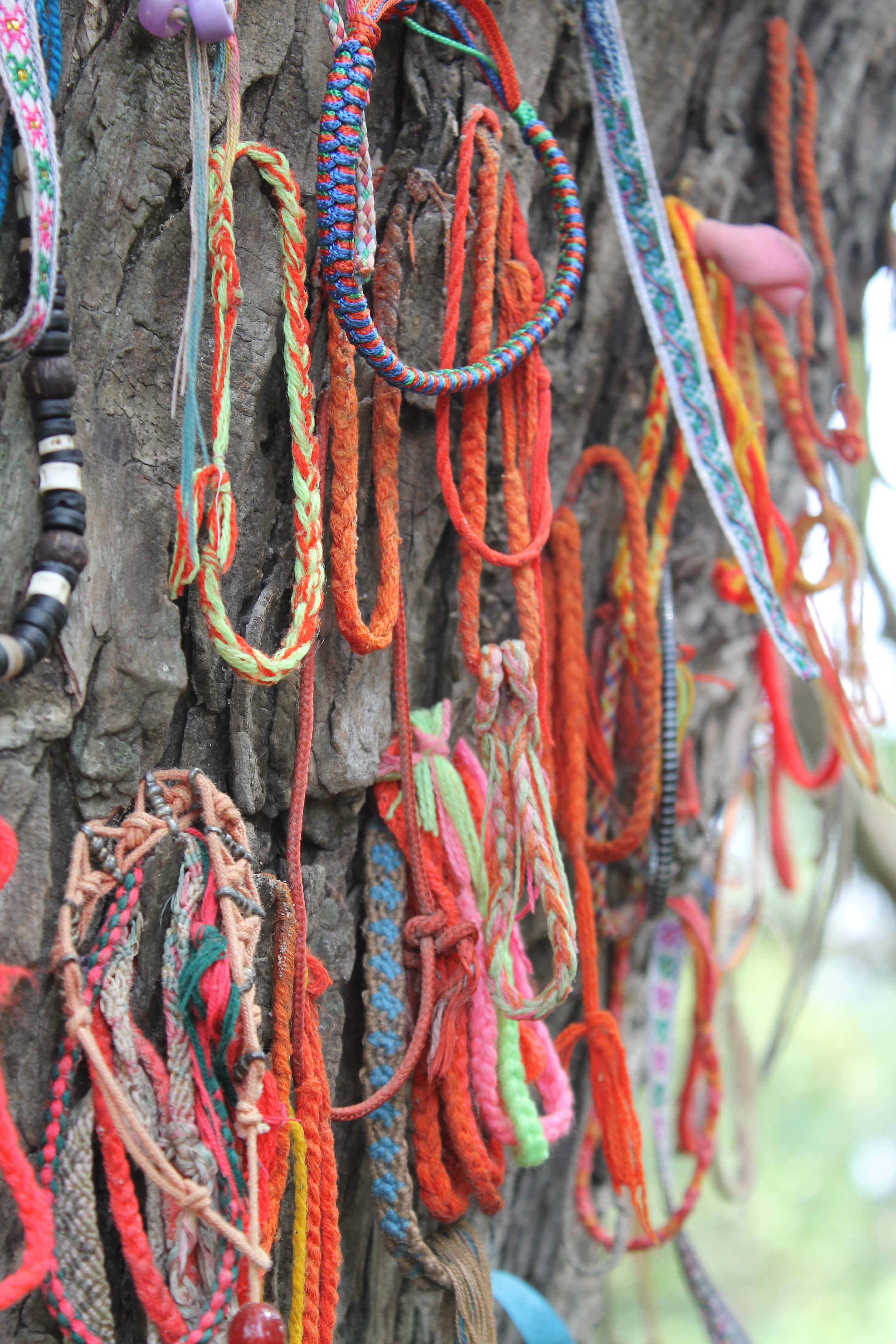
We owe it to the dead to visit these places. We owe it to ourselves, and to those who come after us, to bear witness to this history we share, close up or far away. The pit that opens at the base of your spine when you see the hairbands and wristbands hung on the trunk of the tree against which infants were swung by their feet in order to bash in their skulls, so that their final cries would be the last sound mothers take to their own bloody graves – that pit that opens inside you and threatens to take you down into a place of darkness while you stand in bright sunlight, among strangers, and attempt to absorb a soon-forgotten truth – that pit is a small price to pay to be among the living. It is a small down payment against repeating history. And it is a great investment in understanding the people who later today will sell you a coffee, or a dress, or bring your dinner, or guide your tour.

IMG_7148

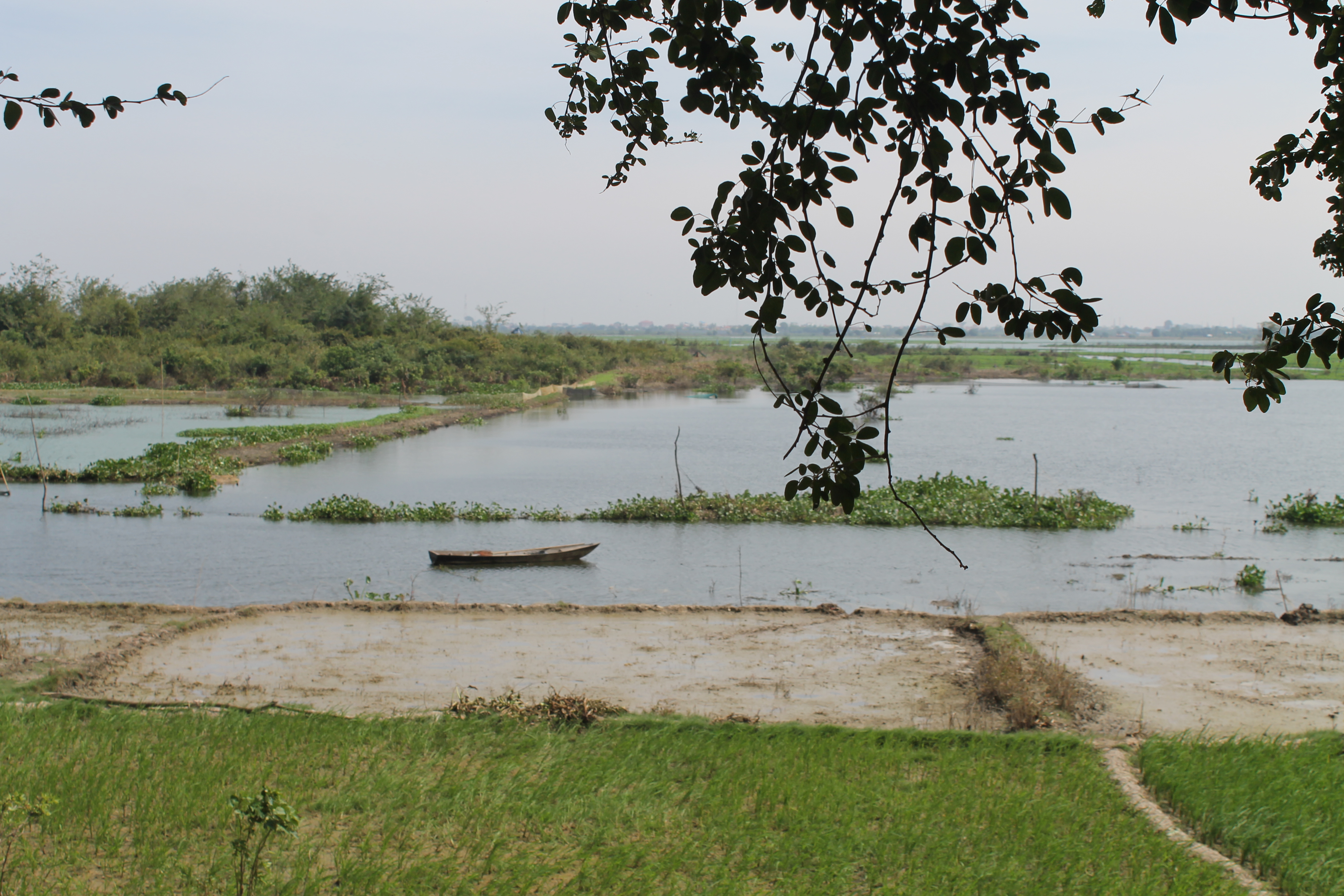
Because life goes on. Cities are built, and modernized. Farms are cultivated and harvested. Fish are pulled from the lakes and rivers.  As you walk around the pond at Choeung Ek – the one which is known to still hold bodies of the dead – you look out across a rice paddy. To the tourist, the view is serene. Children come to the fence and whine, “hello… mo-ney,” holding out a palm. The tone is so grating it is beyond practiced, and you are tempted to lean down and give them a bit of marketing advice: dial it back a bit. Raise my pity and maybe I will pay.

IMG_7136

You can’t help but wonder what they’ve found while playing in their own fields. But they still play, because that is what children do. The tuk-tuk driver who brought you here still has a story to tell – his parents if not his own. It is happening all around us, this history, and while we’re watching this one unfold, it’s happening simultaneously somewhere else. While we watch, eyes wide open, and wonder if we should risk speaking up.

IMG_7052

For more pictures of my time in Phnom Penh, click here.

Asia, South America, Tourist, Traveling

The Happy Room

The restroom. The WC. Toilet. Powder room. Bathroom. It has a million uses and a million euphemisms, and nothing will make you feel farther from home than being so confused about how  or where to handle your basic bodily functions that you are afraid to pee.

My favorite bathroom nickname accompanied with one of the nicest places I’ve stayed. On a junk boat in Bai Tu Long Bay, our guide repeatedly reminded us, before we headed out for a kayak or hike, to go to, “the happy room.” It elicited giggles, until one guy went to the happy room erected near the cave where we ate Christmas Eve dinner and hit his head so hard on the rock ceiling that he bled for two hours. Not so happy.

Twenty years ago, I learned the hard way what to expect from plumbing in the developing world. Nothing teaches you to appreciate the luxuries of home quite like having to crawl out of a sleeping bag in the middle of the night, put on two extra layers of clothing and your hiking boots, and race outside in 15-degree weather to have multiple bouts of diarrhea in a dirty outhouse. What I hadn’t expected, on this journey, was to find report-worthy bathrooms before I even left the relative haven of the United States.

On I-8, so far down the state of California that a random border patrol outpost pops up out of nowhere,  I pulled over at a rest stop between the east-and west-bound segments of the highway. There is a special place in hell for this chemical toilet positioned near a neglected, overflowing dumpster surrounded by more red ants than I could find in the state of Texas, and quite a few large bees.

Conversely, in southeast Wyoming, just off I-25, oil dollars have developed a rest stop complete with dinosaur fossils, dioramas on the history of Wyoming, and the cleanest highway-side bathroom I’ve seen.  In Wallace, Idaho, a town familiar to those who’ve read The Big Burn, a large green area with outdoor exhibitions on mining and logging, the history of the town, and a lovely playground is sabotaged by a metal toilet-tank combo, the likes of which I believed only exist in prisons. Clean, but depressing nonetheless.

Let’s be honest: the issue isn’t ambiance. It’s sewage. Like most of life’s unpleasant aspects, sewage is something best put out of sight and out of mind. In much of the developing world, where things are turned inside out, sewer systems are close to nonexistent. Necessity being the mother of invention, this leads to some creative ways to handle every day need.

The key to getting around plumbing problems in places with little infrastructure is to reduce waste. No toilet paper goes in the toilet. Instead, it goes in a waste bin next to the toilet. The only place I’ve intentionally flushed any toilet paper in the last three months is on an airplane – which makes business class seem even classier. The more common solution to this problem is just to not use toilet paper. Problem solved. One problem, anyway – and another presented. How does one…clean up? The answer is: water.

Water, you ask? What do you mean, water?

Here, we have two choices. The manual method is the bucket of water with a scoop/cup which you use to clean yourself. The ‘automated’ method – think mobile bidet – is a sprayer like that which may be on the side of your kitchen sink, used in theory to clean yourself.

IMG_5582

In practice, by the unpracticed, this tool frequently leads to an entertaining mess. If you are lucky. If you are unlucky, it leads to an entertaining mess on your clothes. Neither of these methods leaves you dry – an obvious point I feel the need to mention.

Honestly, one should never assume that there will be anything useful in the bathroom. If you want toilet paper, carry your own. I’ve been pleasantly surprised by how seldom I’ve had to pull mine out of my bag  on this journey. As a result, I’m still carrying around part of a very high-grade roll of Charmin pilfered from a friend’s apartment in Dallas.  You should also never count on having anything with which to wash or dry your hands. I’m ok with being that horrible tourist with the hand sanitizer. I’m not afraid of germs; I’m afraid of typhoid. As a consequence, I’m also still carrying the same container of hand-sanitizer I brought with me from the states.

While I’m being frank, one should also never assume there will be a toilet in the happy room. Don’t worry – you can still be happy. A squatty, in a lot of instances, is actually cleaner than a western toilet. Especially if you are in places where people aren’t going to sit on it anyway – or where, as is frequently the case in Asia, they have to be reminded not to stand on it.

IMG_7095

None of this addresses what happens with what goes in the toilet. In many places I’ve seen, much of the plumbing is actually not hidden in the walls. The sink and the bathtub (a rarity) may drain out of a pipe and into the drain on the floor.IMG_5610

The same will be true of the shower, if it’s actually a separate section of the bathroom. More likely is that it will be a showerhead coming out of the bathroom wall, and should there be toilet paper provided for you, you’d best remember to remove it from the room before accidentally turning it to paper-mache material by turning the shower on in its presence.

IMG_5583

But what of the actual sewage? I have mentioned that in some places, it is actually running right beneath the sidewalk, as an unfortunate misstep may reveal. In other locations, nothing’s left to the imagination: it’s simply running out from beneath the outhouse. For example:

IMG_6428

Occasionally, you can get the same thing with a much nicer view:

IMG_6503

Or this, where you simply squat over the ditch with water that runs through it…and I honestly don’t want to know where it goes.

IMG_6438

More disturbing were the outhouses I saw at the floating villages on Inle Lake, which is also ‘famous’ for its floating gardens, which yield tomatoes, cucumbers, and watercress offered in every restaurant in the vicinity.

IMG_6808

I ate the tomatoes. They aren’t Washington State heirlooms in August by any stretch, but they didn’t taste like their fertilizer. One of many small blessings I’m counting while I wait to see what entertaining plumbing Africa has in store for me.

Asia, Tourist, Traveling

Bagan Bandit – Barely

When I get to the bottom of the temple steps, the hotel staff is waiting for me. Two of them, boys almost, have followed me here on their motorbike, determined I owe them for one of my five nights in their hotel. A night for which I paid online, three days ago.

We have had this conversation already once today, at 5:25 a.m., when I asked them to call the taxi that was ten minutes late. The sun only rises once a day, and this was my last chance to see it in Bagan. I was not willing to wait patiently while the light rose through the morning mist that hangs over the temples and sugar cane. Instead of calling the taxi, they started sifting through a registry notebook.

“Is the phone number for the taxi in this book,” I asked, smiling, in my English which is broken from conversing with non-native speakers for weeks on end. It is unfair to speak grammatically proper English when you are talking to people who only know half the words (which is of course many more than my two words of Burmese). The remainder just get in the way, so I’ve learned to take them out. It reduces confusion to a tolerable level for both parties. “I get you phonebook,” I ask, pointing to the phonebook, never used, on the lobby table.

Bagan phone book

Bagan phone book

“Yes, yes, taxi coming. And you pay for the night of the 11th?”

“I’m sorry?” It’s what has replaced ‘excuse me,’ in Myanmar. For everything.

And so the conversation went, the poor clerk, speaking to me in his five available English phrases, both of us trying to be polite while not giving ground.  I explained that I had paid, online, on Agoda, just like all the other nights.

Not only did I pay, but I gave the day manager the reservation number. My name was on the welcome board outside the door that day, though I was already riding a bike through a countryside of red temples, covered in dust and sweat, flipping off my flops at the bottom of steep temple stairs whenever I could to climb to their tops, wander their hallways, kneel in front of their giant sandstone and gold leaf Buddhas and ask for a little wisdom or peace.

Red temples in the country

Red temples in the country

I promised him that I did not owe him any money.  And then I pointed to the whiteboard on the wall where it was clearly written in Burmese from the night before: 5:15 to Buledi for sunrise, 8:00 a.m. to airport for room 501.

Room 501 for sunrise pickup

Room 501 for sunrise pickup

And then I lost my composure, and said he needed to call the taxi right now because my friend was waiting and the sun was coming up. And it scared him, so he did.

We made the temple for sunrise.  We stayed for two hours, climbing up the steps in pitch black and watching the mist creep, the light change, the hot air balloons rise above us with a loud, repetitive hiss of helium. We listened while fifteen Chinese shutters went off repeatedly, watched professional amateurs with tripods set up shots, joked about gently nudging them over the ledge to get them out of our own photographic frames.

The cold air turned warm with the appearance of orange on the horizon and at last, we decided we were ready to climb down, get some coffee, and move on from temples to lake, and that is how we found ourselves standing by the taxi with the hotel staff, holding two of my three reservation receipts and convincing me I owed them for the middle.

Travel Companion's rendition of me being captured by hotel staff at our taxi

Travel Companion’s rendition of me being captured by hotel staff at our taxi

They won’t budge. I promise them it would not be good for me either, to owe them money. I get their email so I can forward them my reservation number. They point at my phone and tell me to get it for them, but what can I find them, at a temple? I have no internet, no phone service here. Travel Companion mentions we should go back the ten minutes to the hotel and use their internet to get the number, put this whole thing to rest. And so we do. On the way, I begin to question myself.

Maybe I didn’t really make the reservation? With all the problems with the promised free wifi that goes out for ten of every twenty minutes….with the rainstorm that knocked out the power and added a welt to the already buckling ceiling of my room …maybe I didn’t feel motivated to add another $43 to my tab?

At the hotel, the wireless isn’t working. The day manager is there and I remind her I stood in front of her and gave her the booking number. Maybe it isn’t so nice to tell me I am lying? They invite me into the office to use their computer.

I take off my shoes and enter. I try to load web pages that move at the speed of a 1996 dial up connection. One of the young men from the temple stands over my shoulder, waiting. The others huddle in reception, flipping through pages of registration receipts. And then I hear it. From the young man who was so determined in the temple.

“Oh shit.”

I close the internet browser, push back my chair, and walk out of the office. “Thank you,” I say. “Chi-zu-be.” And I go to have my coffee, and fly away.

Asia, Tourist

Myanmania

Everyone is flocking to Myanmar. They want to see what there is to see before it crumbles to the ground and is replaced by progress, westernization, and tall gleaming buildings. They better hurry.

Myanmar Embassy Visa Services in Bangkok

Myanmar Embassy Visa Services in Bangkok

Yangon is crumbling beneath your feet. The earth is coming to take back what is hers: the colonial buildings are beginning to hide behind the trees that grow out of their walls four stories up, and the mold that covers their vibrant colors in a patina of black. On ground level, gleaming electronics stores filled with Bravia flat screens and ASUS laptops are built out in glass and tile, clean and modern. One story up, laundry hangs to dry over balcony railings.

IMG_5590

It doesn’t matter if the earth takes back the buildings, because life in Asia happens on the street. Sidewalks are packed with stalls and tables – little plastic tables in primary and pastel colors, set with metal teapots and waiting for customers, looking like a child’s tea party is about to take place. As suddenly as evening falls, the tables fill with people eating, drinking, pulling their day to a close, or their night to a warm beginning. In the smaller streets, not just eating, but dressing, cleaning, a street shave and a quick brush of the teeth. The country is turned inside out.

IMG_5649

Waiting for lunch customers in the market, Yangon

Watching the SEA games on the street in Mandalay

Watching the SEA games on the street in Mandalay

The sidewalk itself, when not covered with business, is also being taken back. The thick cement squares that fit together like blocks are tilting, breaking apart and be careful what lies beneath – the interlocking tiles cover the sewage canal, and you definitely don’t want to fall in. In some places, no sidewalk at all, nothing but the dirt, dust piled high, the earth coming back to claim some territory against the base of a new glass skyscraper. Always, someone fighting back against it, creating a modicum of order with the world’s tiniest broom.

IMG_5643

The sidewalk, crumbling beneath your feet.

In the temples, the fight is constant, even with no shoes on. One day a week, Sule Paya is doused in water and the dirt is swept down the drain by volunteers. It creates a torrent of grime, and a slick danger zone if you happen to visit at that hour. At Shwedagon, each evening sunset is followed by a ritual of orderly sweeping: rows of women fanning out from the stupa like spokes of a wheel, set in motion by a coach and timed to perfection. Photographed to perfection as well (by tourists, with bigger lenses and more aggression than I). Mandalay Hill….well, just plan on scrubbing your feet well after you make it back down.

IMG_5742

The sweeping ritual at Shwedagon Paya

Even the money is a battle between the old and the new in Myanmar. Bring your US dollars crisp and clean. Change them for Kyat on the black market only – the black market that is wide open in your hotel – for 980 to the dollar. But one little tear, one nick or mark on your US denomination, and you pay a ‘commission,’ a discount, to receive your mangled mass of moldy, smelly, torn and written on, sometimes taped-together, thousand-kyat notes, so for every hundred dollars you change, you carry away 90 bills, or more. You feel like a baller until you spend them, and pay a commission again, because prices everywhere run 1000 kyat to the dollar. Don’t bother fighting it. Just smile. It’s the price of being here ‘before,’ the price of coming in early, the price of the tourist pioneer.

IMG_5797

You aren’t a pioneer, my  friend.  It isn’t early. Lonely Planet already has a guidebook, one that  tells you where to go to get ‘off the beaten tourist path.’ The monks at Ganayon Kyaung eat their daily breakfast with 100 Chinese cameras shuttering through the windows of the dining hall. Everyone not old enough to have learned English before the British left is fighting for the chance. Yangon University, famous for educating the likes of Aung San, the father of Aung San Suu Kyi, is reopening and the lines of applicants are long, and talented. People who haven’t ever voted talk already about the 2015 election, when they will cast ballots for the embattled Suu Kyi, even while they tell you what they think she could do better. The country is bursting with people looking to grab hold of a decent opportunity.

Don’t think you’re on a solo soulful temple journey.  Before you take off your shoes someone will ask to practice their English. “Hallo, Hallo,” they will cry as you walk down the street, persistent and friendly and expecting an answer. Before you can muster a stumbled, “mingalaba,” a pupil will be at your side, too close, and won’t leave. Climb all 45 minutes (or 25, but don’t bother speeding up, you can’t escape) of Mandalay Hill and you won’t be left alone. On the street, it will be constant. In a monastery, it will be the monks.

And how can you not answer? How can’t you smile and sing, “hello!” This is what you wanted, isn’t it? Women with thanaka paste sponged onto their faces running up to your own pasty face with their toddlers, telling them to say, “mingalaba! Hello!” Isn’t this what it means to be ‘first?’ It’s the price you pay to be able to say later, “I was there, when.”

Shwedagon at sunset - one of many reasons why it doesn't matter if you aren't first - you'll still go back.

Shwedagon at sunset – one of many reasons why it doesn’t matter if you aren’t first – you’ll still go back.

For more pictures of Myanmar, please click here