Life Skills, On the Road, Tourist, Traveling, United States

Where I’m From

Three months before I turned 40, I spent a month obsessively looking at new cars on craigslist. When I realized I was perfectly happy with my 12 year-old stick shift station wagon, I left the cars behind and decided just to pierce my nose, like I’d wanted to do since I was 14. Suddenly, I was freed from the socially-acceptable expectations of mid-life, and welcomed into the decade that would allow me to just be me. Midlife crisis narrowly averted.

Not even a full state from Texas, a crisis of an entirely different order arose. I took refuge from a torrential downpour at a café on the Taos plaza, and got to talking to a woman about her dog. Naturally, she asked me where I was from. A normally chatty human being who can carry on a conversation with anyone from the Pope to a wall, I was struck silent. I didn’t even stutter; I just couldn’t answer. I was faced with a geographic identity crisis.

For the eight, mostly uncomfortable years I lived in Dallas, I told people, “I live in Dallas, but I’m from California.” This is the technical truth – I was born in San Francisco, and consider myself a Californian – but it isn’t the whole story. I arrived in Dallas a full seven locations after I originally left my home state. As a result, I’m a committed recycler with aggressive driving skills, a very northeastern way of flipping the bird, a New Yorker’s style of walking through a crowded urban center ignoring everyone around me, a Northwestern desire to be outside even when the weather fills with rain and wind, and a Texan belief that my boots and a good buckle should work for any occasion. When I say, “I’m going home,” I could be referring to Seattle, San Francisco, or Dallas. But I don’t know how to tell someone where I’m from, because choosing one place feels like a lie.

I hoped this issue would resolve itself when I left the country, but it got worse. Complete strangers took a kind-hearted interest in the specifics of my personal history, and weren’t satisfied when I told them simply, “I’m from the United States.” People in other countries know a surprising number of US states; they also watch a lot of bad tv. Texas is on the map for Dallas (the original), Walker Texas Ranger, and George Bush. Telling people I’m from California garnered a lot of, “I’ll be back,” “oh…Ah-nald,” and, “California?…Hollywood?” So I tried Washington.

IMG_4876

Cold, beautiful west coast

Understandably, it’s confusing to foreigners that the state of apples, Starbucks, and the Olympic peninsula is both not the same as the capital city that shares its name, and is located on the other side of the country. I didn’t bother correcting people who responded to Washington with, “ah! Obama’s house,” until the questions about DC got too involved, and I would confess that I was actually from an entirely different place (though I’ve lived in both).

Washington State

Washington State

The irony of all this is that it actually doesn’t matter. In earlier eras, outside of Manifest Destiny, the Gold Rush, and great migrations, people rarely moved far from home. Now, we’re in a shrinking global community, where constant population flux consistently alters cultures, blending them across geographic boundaries, until good barbeque isn’t just found in the south and good bagels aren’t held captive in New York. The San Francisco of 2013, with its dot com billionaires and microapartments for a million dollars, isn’t the San Francisco of 1993, with its distinct neighborhoods, affordable housing, and hippy funk. (When people ask me if I’m moving back to San Francisco, I feel compelled to point out that San Francisco isn’t there anymore.)

And yet, for all this movement, for all this homogeneity of culture, place matters. When I go out for coffee, place matters. Am I walking there, biking there, driving there, or taking public transportation? Is it Dunkin’s coffee, Starbucks coffee, local coffee, organically sourced and priced up coffee? Or maybe it’s Turkish, Thai, or Vietnamese white coffee? Is it hot or cold? Is it smooth roasted, or bitter? Am I standing at the coffee bar chatting with neighbors, sitting at an outdoor café under a heat lamp, or grabbing it to go while I drive off someplace?

Place matters for the most simple things, because it’s the simple things that form who we are. The personality of a place shapes our approach to the world; it demonstrates for us how we absorb information, how we respond to stimuli around us, and how we view what we see moving forward. Thirty years ago, when I moved from the Bay area to Boston, this mattered a hundred times more.

I left a place of cold oceans with rough surf and foggy-day picnics on the beach, of yoga and recycling and home-made peanut butter, and went to the land of green pants with blue whales, classmates related to passengers on the Mayflower, and ‘one if by land two if by sea.’ As a result, though I longed regularly for the west coast of my childhood, I was raised using the T, rooting for the Celtics, watching my first baseball game from the Fenway bleachers, and busing out to Great Woods for one concert after another. There is no mistaking that these experiences gave me some of the independence that I enjoy when I travel, and that the longing to get back to the other coast, to see what was beneath me when I flew from one to another, gave me my desire to actually buy a plane ticket and do it.

New York subway

New York subway

So when I tell people I’m from California, I feel like I’m disrespecting half of my roots. And I feel like my roots have more than two halves. Didn’t summers on a small island in Puget Sound teach me to love reading, staring at the water, and the smell of fresh wind? Didn’t college in New York help me understand that I can only do cities  for a moment before I shut down? Don’t we continue to grow, to absorb place and its personality, and to change as a result, throughout our lives? I didn’t move to Texas until I was 30, but didn’t it warm me a bit, teach me a about expressing myself respectfully to people with opposing viewpoints, and help me understand myself better? Isn’t growth and absorption of place the only thing that explains Madonna’s fake British accent?

For all the shrinking of the world, place still matters. The more we create these hybrid humans who herald from multiple cultures, possibly without much leaving their own, the more confusing the question ‘where are you from’ will become. I, for one, am looking forward to it, so I’m not the only one suffering from a geographic identity crisis.

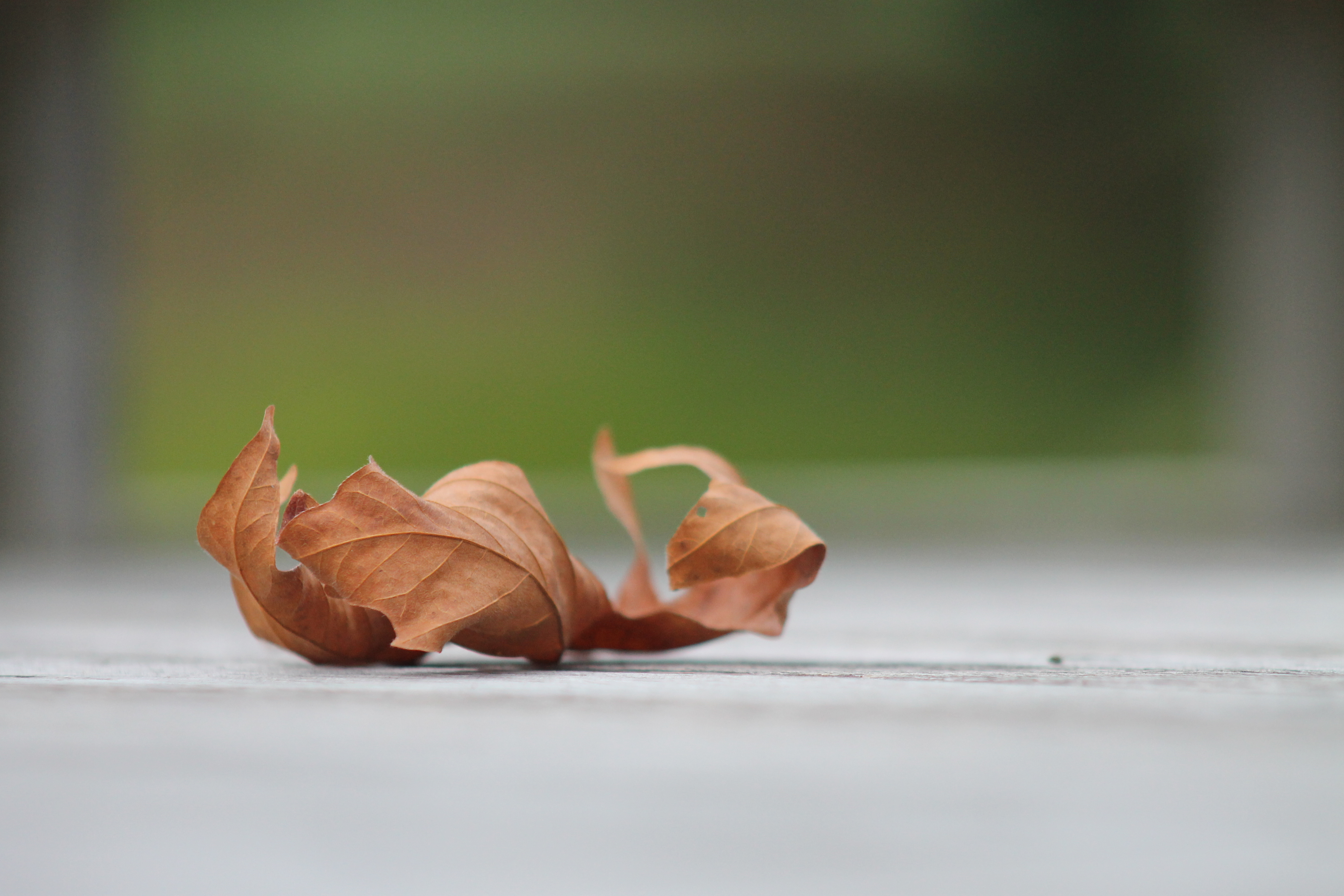
Crazy Dallas weather

Crazy Dallas weather

On the Road, Tourist, Traveling, Uncategorized, United States

Heaven on Earth

I’ve been thinking about heaven a lot lately, driving around the United States and finding myself fully realizing the words to ‘America, the Beautiful,’ as amber waves of grain roll by my car windows. I’ve fallen into describing the awe-inspiring landscape as “heavenly,” meaning it brings peace, visual pleasure, and possibility into my frame of visual reference, and thought. In hotels, I’ve slept on more than one ‘heavenly bed,’ some because they are branded that way, and others because they bring the possibility of sleep and the chance to unbend my frame from it’s too-frequently seated position.  And from airplanes, of course, I’ve looked down at an ocean of puffy white cotton-like clouds outside the window and thought, ‘this is what they say heaven looks like.’ Yet upon my return to Orcas (the island I’ve made home base this fall) after a few weeks away, it occurred to me that if there is a heaven on earth, it is not a place or a vision, but a smell.

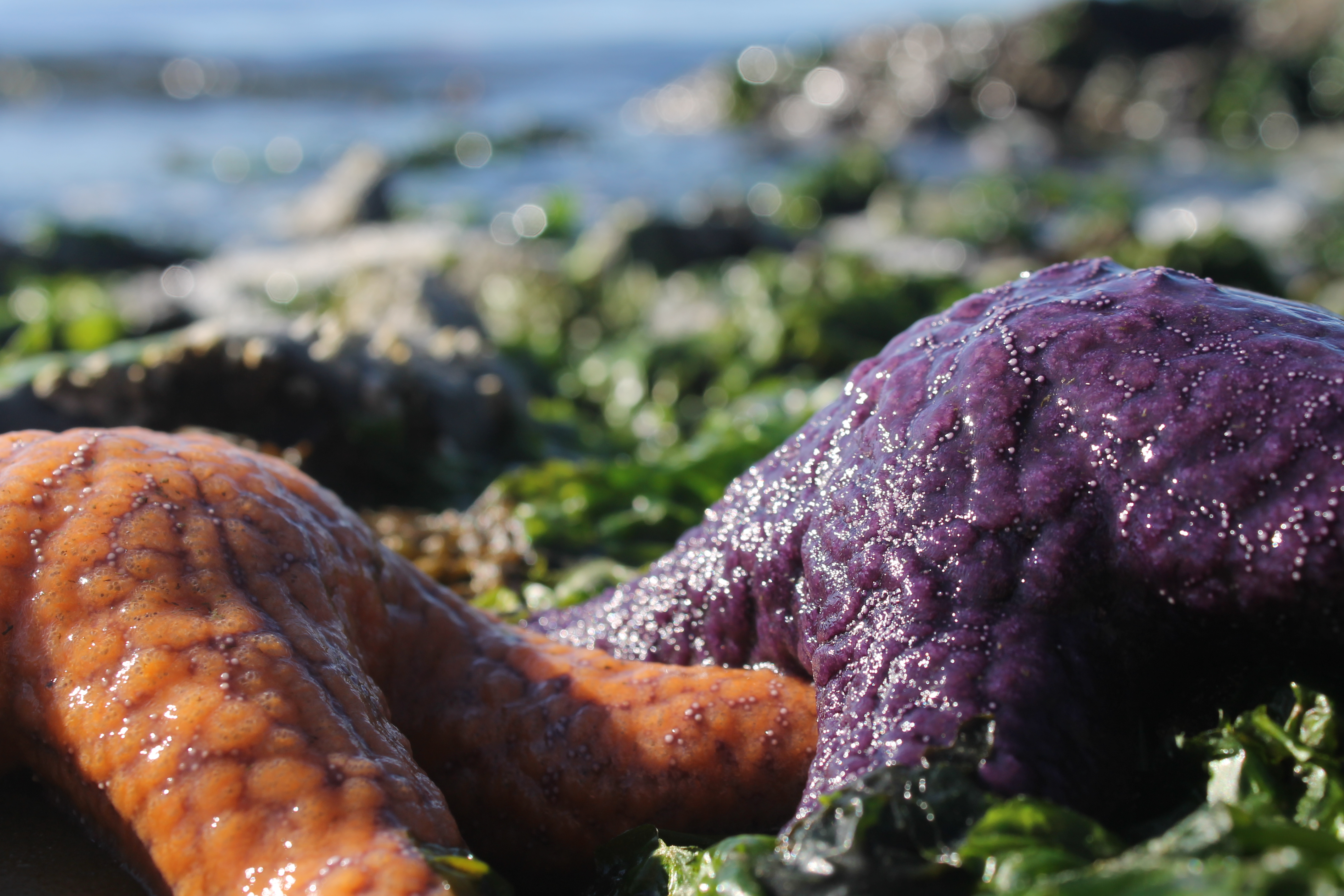
Sometimes heaven smells like wet seaweed

Sometimes heaven smells like wet seaweed

Smell transcends time and place. It can carry you from where you are now to where you were when. Think about it: the smell of fresh-baked cookies – anywhere – in a home or a bakery or wafting down a street in any small town or large metropolis – any where  in the world, can pull you from the moment you are in, to another moment, possibly long ago and far away, that is anchored by the smell of warm chocolate chips and dough that sinks back to hug them as they cool on a rack, and defined by the moment of peace or hope that it brought to you back in that time and space. Isn’t that what heaven is? The transcendence of the present to a larger realm of peace and possibility?

Sometimes heaven smells like fall

Sometimes heaven smells like fall

I am a person of place. I always have been.  I engage in a place by falling in love with its landscape. When I lived on the east coast, I often longed for the west coast with its cold ocean and high foothills. I longed for the hilly streets and old Victorians of San Francisco. I longed for the stillness of this island on which I’ve spent much of the last two months, and for the serenity of the view from where I now sit – over the grass, beyond the apple trees to the sound, to Lopez Island, to the sky above it and the Olympic mountains standing guard behind. For most of my life, I have associated this anchoring, this peace, with this place. I believed, for much of  my time living in Dallas, that what made it difficult was that city had no hills, not enough trees, too much strip mall cement.

And then a week ago, I drove off the ferry, cracked my window, and was in my heavenly home. The smell of clean air, laced with sea salt and rained grass, rushed in to welcome me.  In the distance was a top-note of wood-stove burning off fall chill and deep, deep beneath it were undertones reminiscent of the sun warming sugar out of last summer’s blackberries.

Suddenly, all the smells came to me. It wasn’t San Francisco I missed when I was on the East Coast. It was the smell of old book stores filled with history and revolution. It was salt floating on fog on early mornings when I waited for the bus to work. It was eucalyptus  trees carrying their native Australia to Tennessee Valley. Strip malls weren’t the problem with Dallas. The air was. Except when it was raining, and the air was filled with the electricity of a storm, Dallas atmosphere stagnated. There was no news being brought on the wind. You couldn’t tell where the ocean was by inhaling. There was no possibility blowing through.

And so, as I prepare to leave for lands that smell of dewy mornings in thin air, of the dirt road beneath your feet, the slow burn of trash in a neighboring field, the diesel of combis and collectivos that roar by, I’m taking some time to absorb this heaven. Lying in bed last night with a rain pounding wind down through the alder and rushing the scent of leaves and water through the roof eaves to where I lay, I inhaled deeply and held my breath, absorbing just a little bit of heaven on earth to bring with me on the road.

Heaven is the smell of true north

Heaven is the smell of true north

On the Road, Tourist, Traveling, Uncategorized, United States

Wild. Wonderful. Wyoming

I’m a sucker for a diorama. Always have been. Maybe it was those sugar eggs we got at Easter with the little scenes inside, or an over-eager grade school homework project  that did it, I don’t know. Maybe I just like how life looks, all laid out for view in a tidy defined box. Whatever it is, it’s stuck with me. So when I pulled into the Southeast Welcome Center on I-25 outside Cheyenne, Wyoming and perused the brochures to see what might be found in Casper, where I was headed for the night, it is no surprise that the flyer for the Fort Caspar History Museum caught my eye.  And it didn’t disappoint.

Captain's letter awaits an envelope

Captain’s letter awaits an envelope

The museum is on the site of Fort Caspar, and the remaining buildings – officer’s quarters, the mess, the store and stables – have been restored and stocked and they sit away from the main museum site, so when you stand there, wind blowing up from the Platte, sun bearing down on an early fall day, squash ripening in the fort garden, you can *almost* sense what came before you, quiet, isolated. Blue coats, sabers, and captain’s hats adorn the bunks, checker and card games are laid out on communal tables next to tin mugs, ready for rowdy players and beer. A telegraph machine waits for news on a table in its own cabin. Off to the side, a Mormon Ferry buggy stands proud. Diorama, real-size.

Soldiers quarters in the mess

Soldiers quarters in the mess

Telegraph table.

Telegraph table

Inside the museum, the history of Wyoming has been lovingly recreated in one diorama after another. A display of stone tools through different eras of history outlines changes in the land and the people, new kinds of stone, new types of tools, arrival of Europeans. Around it, in wood and clay, miniature native Americans hunt mammoth, hunt buffalo, build teepees, fend off Europeans, and then attack them. Men and horses fall in gory fashion, red-painted blood oozing from their detailed clay bodies. It’s miniature America in all her glory.

Miniature America, in all her glory

Miniature America, in all her glory

Wyoming is full of little treasures like this: pieces of history that have been picked up, cleaned off, embellished and put on display. I skipped three other museums in Casper in favor of getting back on the road to Bozeman, and didn’t even touch on others that are sprinkled along drivable routes across the state. Maybe it’s the benefit of oil dollars, though neither Fort Caspar nor the Welcome Center itself (which had a historical display, including a dinosaur skeleton and a number of dioramas) glossed over the boom and bust effect of the industry, that fund all these little gems.

And what would be the point in hiding this ugly truth? You can see it in the life-sized diorama of scenery that is Wyoming itself as the land goes by. Towns like Story, Buffalo, and Bar Nunn pulling you off into the distance of gas-scarred hillsides. Mule deer and cattle graze side by side on rolling grass-spotted hills and mesas, hiding between rock skyscrapers, divided by snow fences, waiting for winter.

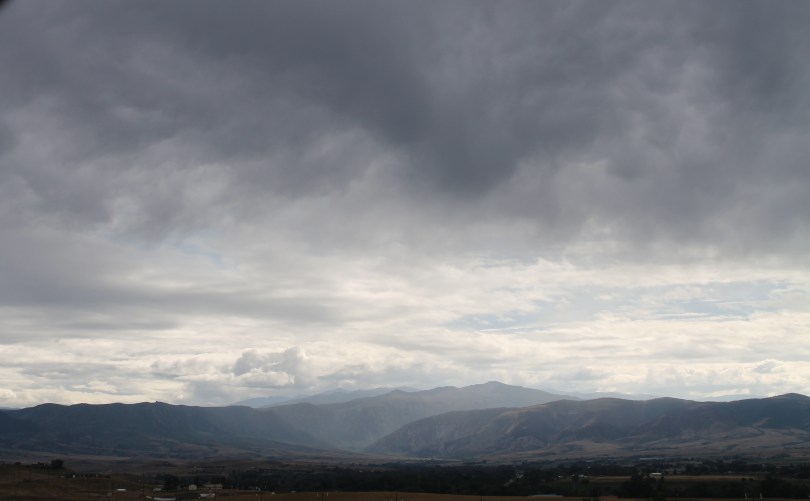
Wyoming rolling by

Wyoming rolling by

You feel the state in your bones as you drive it: riverbeds of cottonwoods changing colors and hardly another tree in sight except on the distant jagged mountains.  Red rock, granite, trains winding through. The Crazy Woman river running across it, running through you as you drive by. Wyoming. Wild. Windy. Wonderful Wyoming.

Sun after the rain on I-25

Sun after the rain on I-25

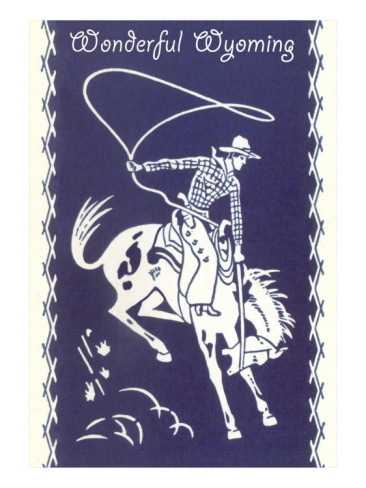
Wild. Wonderful. Wyoming.

Wild. Wonderful. Wyoming.