On the Road, Tourist, Traveling, Uncategorized, United States

Heaven on Earth

I’ve been thinking about heaven a lot lately, driving around the United States and finding myself fully realizing the words to ‘America, the Beautiful,’ as amber waves of grain roll by my car windows. I’ve fallen into describing the awe-inspiring landscape as “heavenly,” meaning it brings peace, visual pleasure, and possibility into my frame of visual reference, and thought. In hotels, I’ve slept on more than one ‘heavenly bed,’ some because they are branded that way, and others because they bring the possibility of sleep and the chance to unbend my frame from it’s too-frequently seated position.  And from airplanes, of course, I’ve looked down at an ocean of puffy white cotton-like clouds outside the window and thought, ‘this is what they say heaven looks like.’ Yet upon my return to Orcas (the island I’ve made home base this fall) after a few weeks away, it occurred to me that if there is a heaven on earth, it is not a place or a vision, but a smell.
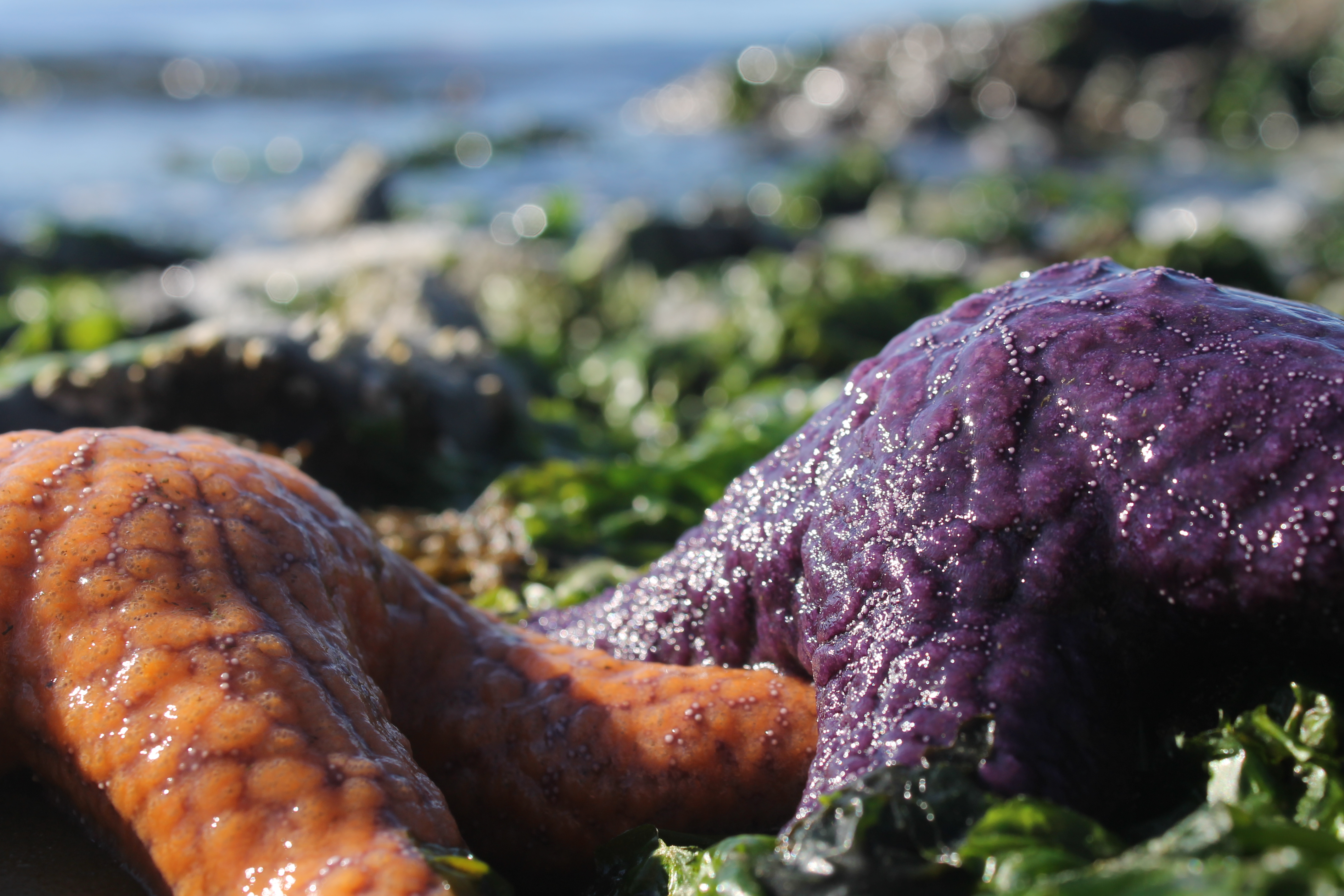
Sometimes heaven smells like wet seaweed

Sometimes heaven smells like wet seaweed

Smell transcends time and place. It can carry you from where you are now to where you were when. Think about it: the smell of fresh-baked cookies – anywhere – in a home or a bakery or wafting down a street in any small town or large metropolis – any where  in the world, can pull you from the moment you are in, to another moment, possibly long ago and far away, that is anchored by the smell of warm chocolate chips and dough that sinks back to hug them as they cool on a rack, and defined by the moment of peace or hope that it brought to you back in that time and space. Isn’t that what heaven is? The transcendence of the present to a larger realm of peace and possibility?
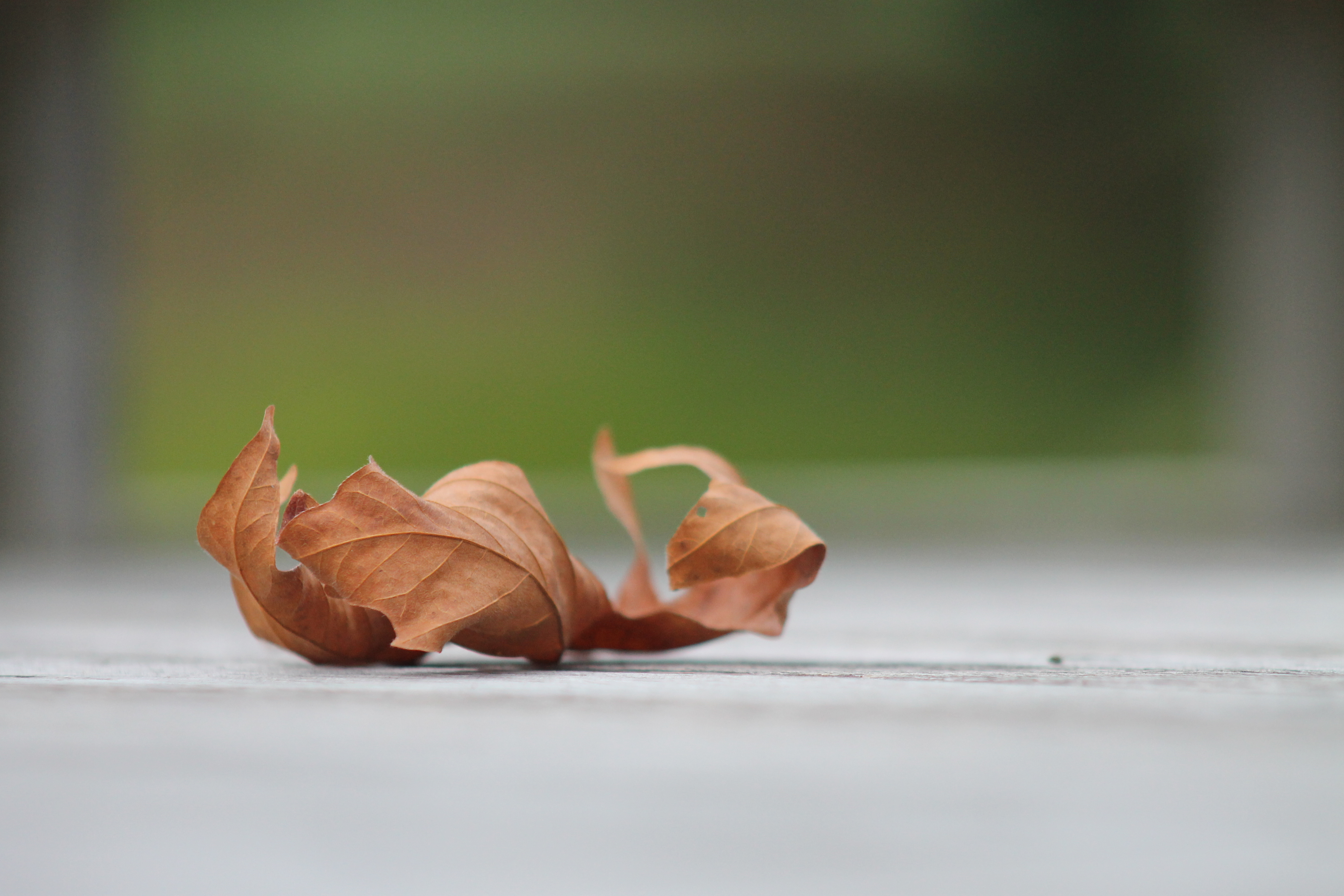
Sometimes heaven smells like fall

Sometimes heaven smells like fall

I am a person of place. I always have been.  I engage in a place by falling in love with its landscape. When I lived on the east coast, I often longed for the west coast with its cold ocean and high foothills. I longed for the hilly streets and old Victorians of San Francisco. I longed for the stillness of this island on which I’ve spent much of the last two months, and for the serenity of the view from where I now sit – over the grass, beyond the apple trees to the sound, to Lopez Island, to the sky above it and the Olympic mountains standing guard behind. For most of my life, I have associated this anchoring, this peace, with this place. I believed, for much of  my time living in Dallas, that what made it difficult was that city had no hills, not enough trees, too much strip mall cement.

And then a week ago, I drove off the ferry, cracked my window, and was in my heavenly home. The smell of clean air, laced with sea salt and rained grass, rushed in to welcome me.  In the distance was a top-note of wood-stove burning off fall chill and deep, deep beneath it were undertones reminiscent of the sun warming sugar out of last summer’s blackberries.

Suddenly, all the smells came to me. It wasn’t San Francisco I missed when I was on the East Coast. It was the smell of old book stores filled with history and revolution. It was salt floating on fog on early mornings when I waited for the bus to work. It was eucalyptus  trees carrying their native Australia to Tennessee Valley. Strip malls weren’t the problem with Dallas. The air was. Except when it was raining, and the air was filled with the electricity of a storm, Dallas atmosphere stagnated. There was no news being brought on the wind. You couldn’t tell where the ocean was by inhaling. There was no possibility blowing through.

And so, as I prepare to leave for lands that smell of dewy mornings in thin air, of the dirt road beneath your feet, the slow burn of trash in a neighboring field, the diesel of combis and collectivos that roar by, I’m taking some time to absorb this heaven. Lying in bed last night with a rain pounding wind down through the alder and rushing the scent of leaves and water through the roof eaves to where I lay, I inhaled deeply and held my breath, absorbing just a little bit of heaven on earth to bring with me on the road.

Heaven is the smell of true north
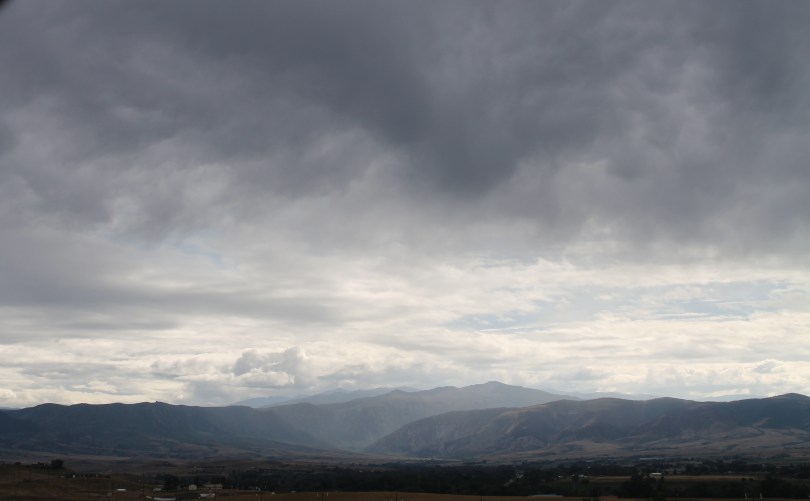
Heaven is the smell of true north

On the Road, Tourist, Traveling, Uncategorized, United States

Wild. Wonderful. Wyoming

I’m a sucker for a diorama. Always have been. Maybe it was those sugar eggs we got at Easter with the little scenes inside, or an over-eager grade school homework project  that did it, I don’t know. Maybe I just like how life looks, all laid out for view in a tidy defined box. Whatever it is, it’s stuck with me. So when I pulled into the Southeast Welcome Center on I-25 outside Cheyenne, Wyoming and perused the brochures to see what might be found in Casper, where I was headed for the night, it is no surprise that the flyer for the Fort Caspar History Museum caught my eye.  And it didn’t disappoint.

Captain's letter awaits an envelope

Captain’s letter awaits an envelope

The museum is on the site of Fort Caspar, and the remaining buildings – officer’s quarters, the mess, the store and stables – have been restored and stocked and they sit away from the main museum site, so when you stand there, wind blowing up from the Platte, sun bearing down on an early fall day, squash ripening in the fort garden, you can *almost* sense what came before you, quiet, isolated. Blue coats, sabers, and captain’s hats adorn the bunks, checker and card games are laid out on communal tables next to tin mugs, ready for rowdy players and beer. A telegraph machine waits for news on a table in its own cabin. Off to the side, a Mormon Ferry buggy stands proud. Diorama, real-size.

Soldiers quarters in the mess

Soldiers quarters in the mess

Telegraph table.

Telegraph table

Inside the museum, the history of Wyoming has been lovingly recreated in one diorama after another. A display of stone tools through different eras of history outlines changes in the land and the people, new kinds of stone, new types of tools, arrival of Europeans. Around it, in wood and clay, miniature native Americans hunt mammoth, hunt buffalo, build teepees, fend off Europeans, and then attack them. Men and horses fall in gory fashion, red-painted blood oozing from their detailed clay bodies. It’s miniature America in all her glory.

Miniature America, in all her glory

Miniature America, in all her glory

Wyoming is full of little treasures like this: pieces of history that have been picked up, cleaned off, embellished and put on display. I skipped three other museums in Casper in favor of getting back on the road to Bozeman, and didn’t even touch on others that are sprinkled along drivable routes across the state. Maybe it’s the benefit of oil dollars, though neither Fort Caspar nor the Welcome Center itself (which had a historical display, including a dinosaur skeleton and a number of dioramas) glossed over the boom and bust effect of the industry, that fund all these little gems.

And what would be the point in hiding this ugly truth? You can see it in the life-sized diorama of scenery that is Wyoming itself as the land goes by. Towns like Story, Buffalo, and Bar Nunn pulling you off into the distance of gas-scarred hillsides. Mule deer and cattle graze side by side on rolling grass-spotted hills and mesas, hiding between rock skyscrapers, divided by snow fences, waiting for winter.

Wyoming rolling by

Wyoming rolling by

You feel the state in your bones as you drive it: riverbeds of cottonwoods changing colors and hardly another tree in sight except on the distant jagged mountains.  Red rock, granite, trains winding through. The Crazy Woman river running across it, running through you as you drive by. Wyoming. Wild. Windy. Wonderful Wyoming.

Sun after the rain on I-25

Sun after the rain on I-25

Wild. Wonderful. Wyoming.

Wild. Wonderful. Wyoming.

On the Road, Uncategorized

Are YOU My Cemetery?

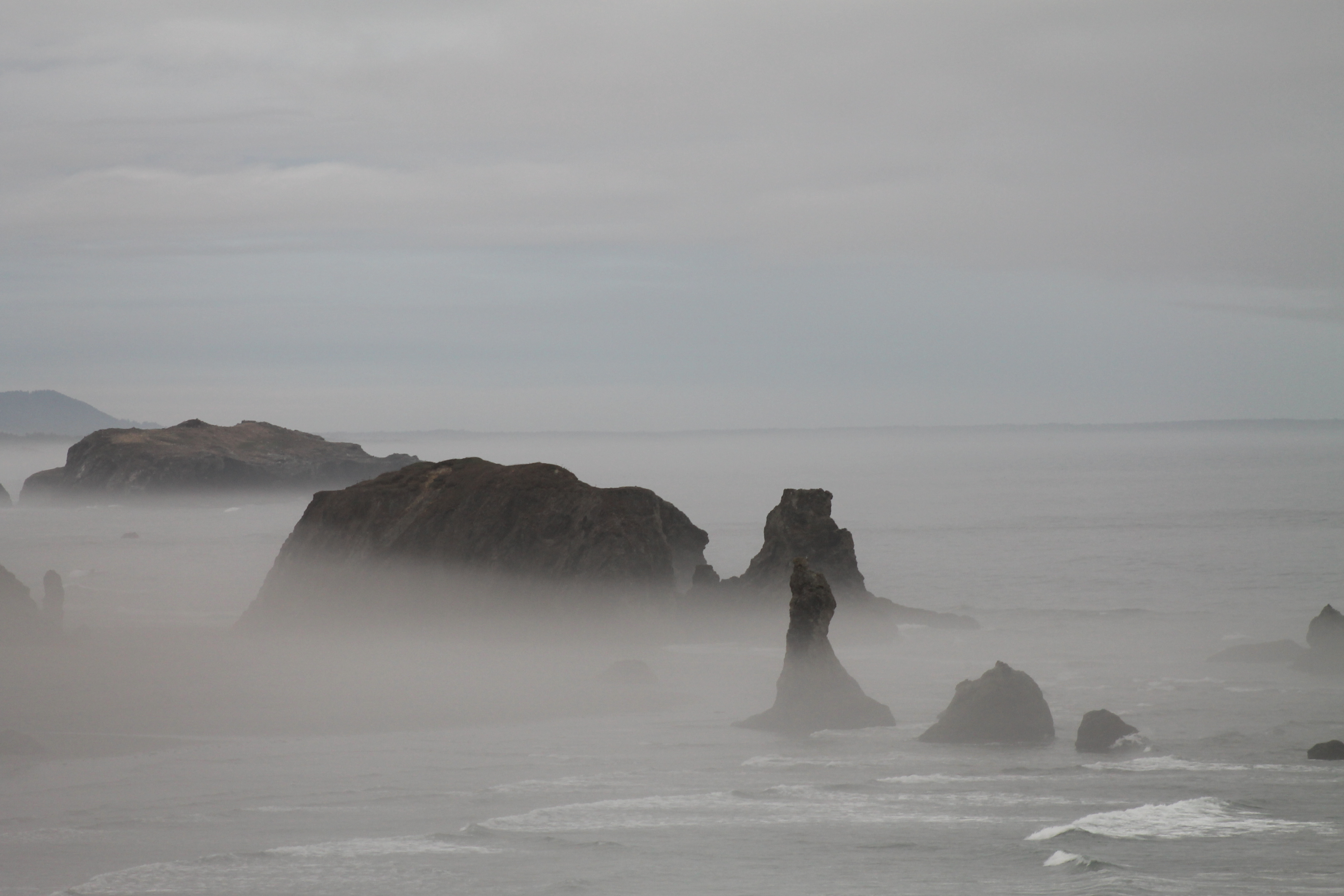
Sea Stacks in Bandon

I’m chasing my ancestors down the path of their history, backwards through the towns they settled along highway 42 in Oregon. The route wraps around the south side of the Coquille river, starting with the warm fog that twists its way around sea stacks in Bandon and heads into Pleasant Valley, where the sun blinks through overcast skies.

My goal is to visit the graves of my grandmother and her family before tearing north on I-5 to make the 9 pm ferry for the San Juan Islands. But a 20-year absence from this part of the country and a couple well-placed questions from my mother have got me reinventing that kids book I used to read in kindergarten, “Are You My Mother?” Instead of a bird asking every living animal or machine if I belong to it, I’m a human screeching off the highway every time I see a sign for a cemetery.

“Are YOU my cemetery,” I asked this morning, after taking a hard left and tiptoeing through the remains of Coquille, to arrive at the Masonic Cemetery. Coquille’s main street looks like a movie set – a stately bank, sculpted storefronts, and too many empty windows in front of which few people move.  The cemetery is so small and non-descript I couldn’t believe the Masons claim it. I u-turned illegally in front of the high school marquee announcing registration dates and head back to 42, conspicuous in my dirty black foreign wagon with the Texas plates.

“Are YOU my cemetery,” I asked again, outside Coquille, when a cemetery sign pointed up a small hill to the Myrtle Crest Memorial Gardens. The hill and quiet atmosphere were promising, but the cemetery was new and compact, one small loop of road with grave markers on either side, and four groundsmen tending to the sprinkler system. One moved his truck out of the one lane so I could get by without running over the dead, and while I headed back down the hill I thought it must be true what they say: the only two things you can count on are death and taxes, and the death part is an increasing certainty in this part of the country, where the land is what you count on, and there isn’t much else.

View of Pleasant Valley from Norway Cemetery

In my memory, at least, MY cemetery sits high on a hill with a view of the valley and a two lane road winding beneath it. There are pine trees, and graves from the last century, and an A&W not far down the road. I remember thinking the last time I was here that this wouldn’t be such a bad place to spend eternity. But things have changed. The winding two lane road is now a six lane arterial, and the town of Norway, which I believe is where MY cemetery is located, doesn’t show up on my iphone map. Still, the road winds on. To the left, hills rise and fall, and to the right, the valley lies down, throwing up a lumber mill, new or abandoned, or a dairy farm, from time to time.

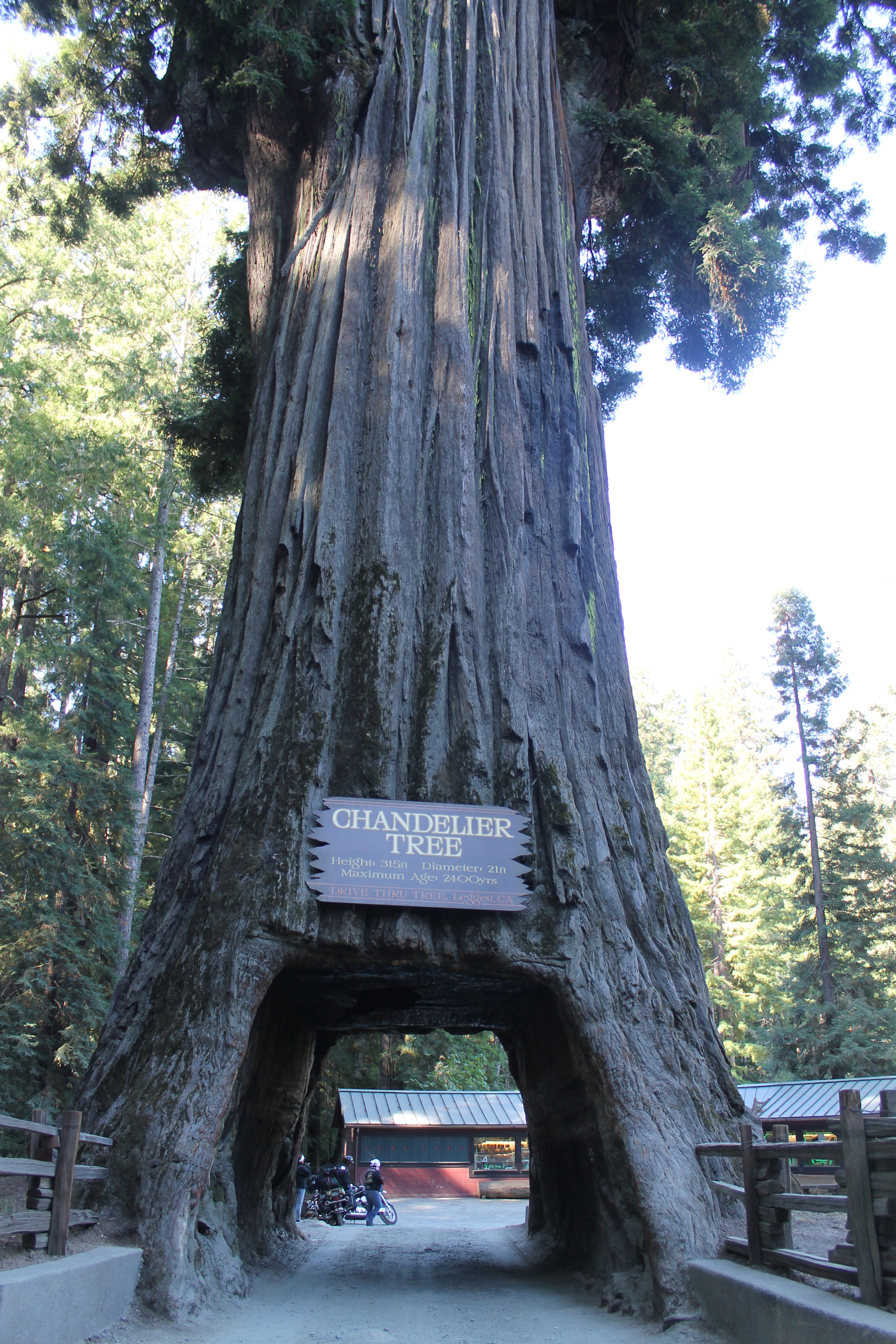
The Chandlier Drive-Thru Tree

They know what they are doing here, and they’ve been doing it for more than a century. Sheep and cattle graze the flat lands, timber is cultivated and felled on the mountains, and milled beside the busier transport roads. Always, trees are left bundled and tall along the most visible pathways, as if the pine curtain can hide a naked mountain of clear cut, or the low bush where trees begin to grow back, only to be cut again in how many years? 40? 50? Nothing will replace those that came down a century ago – like the ones along the Avenue of the Giants I drove yesterday on my way up California. There are no more “Drive Thru Trees” being grown, no more “One Log House.”

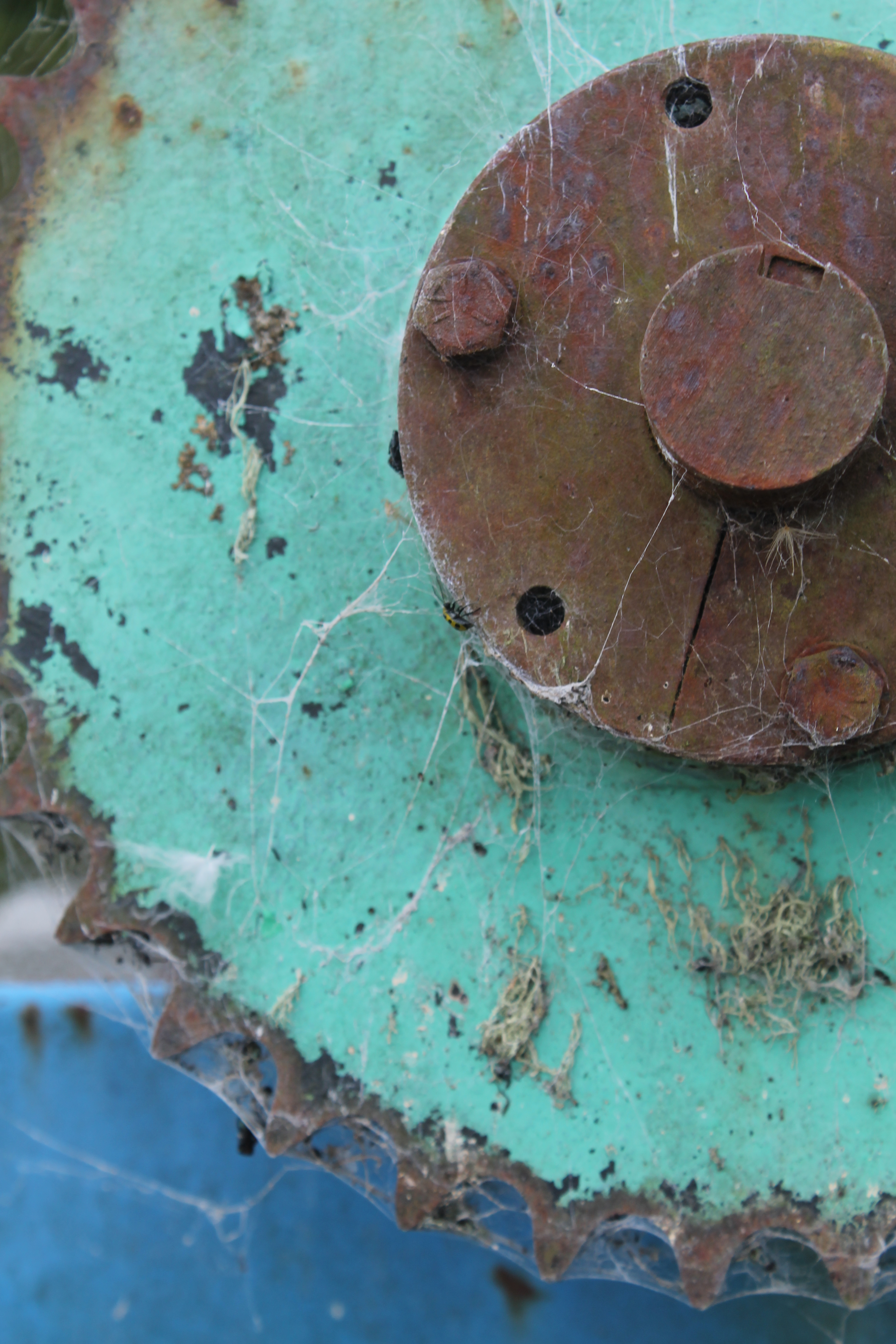
Mechanical memories of yesteryear

Mechanical memories of yesteryear

While I am gaping yet again at a truck cab speeding past, hauling his own back half on his mid section, the empty hitch and fork of a logging truck without the load, I see another cemetery sign out the corner of my right eye. As it registers, the turn-off passes on the left, blurred by the roadside leftovers dancing in the wake of the Mac cab. I take the next opportunity to pull off the main drag and circle back on old 42, slow, narrow, littered with mechanical memories of yesteryear. This is the southern Oregon I remember. This is my America.

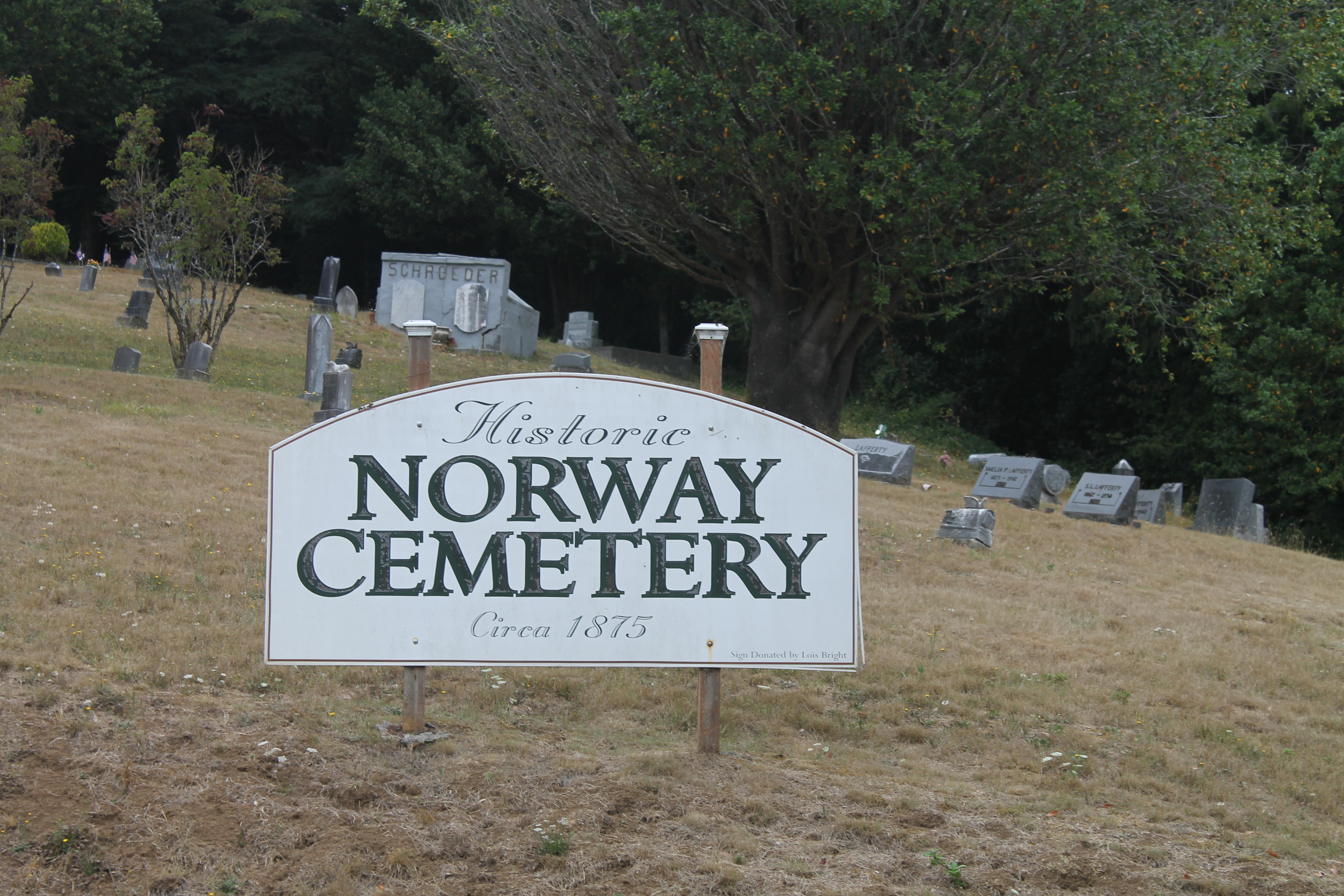
Welcome to Norway Cemetery

I miss twice before making the turn. The new road is up ten feet higher than the old one. To get up the cemetery hill, you must first go down into a rut. “Historic Norway Cemetery,” the sign welcomes. Then validates, “circa 1875.” My grandmother and great aunts, their parents and aunts and uncles are where they were left.  The view is little changed, though the trees slightly overgrown. A lone gardener tends to some of the grave sites.

I sit with my family, have my communion with the dead. The dog chooses my great-great uncle’s stone as a cool place to lay his head on a heating day. I update everyone on my sisters, my niece and nephews, who looks like whom and acts like who else. I sit in silence and look at the valley, then wander around the gravesites of pioneers. And then I head out, communion finished, twist back down  to the new 42, and speed past the A&W to head north.

IMG_3039

On the Road, Tourist, Traveling

Walnut Canyon

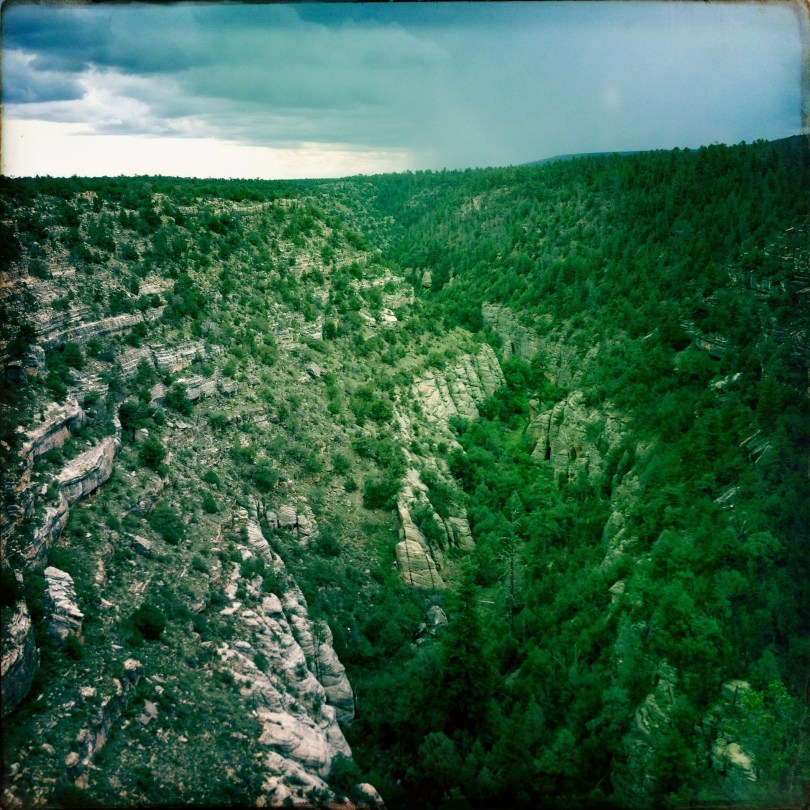
IMG_2397It looks like nothing coming in: a highway exit outside of Flagstaff, a quick sharp turn and the road becomes small, quiet. High, arid mountain scenery. Smell of rain coming in. You get out of your car, walk to the edge, and it falls before you:  a  canyon of dripping limestone and piñon, layers of rock and earth weathered by wind and rain, striated by history.

Look  a little closer. You’ll see what they saw, the Sinagua, who lived here for more than a century, over seven centuries ago. You’ll see crevices that could become home, protect you from wind, hold the heat of a hearth fire. You’ll see the river water below, dirt that could become clay, that could become bricks to build houses in the high-walled world. The view of the eagles, to keep watch. Plant life so diverse it is unrivaled elsewhere in the valley.  And so you build.

IMG_2315Down the 185 steps from the ranger station, the canyon is so quiet you can hear a child sigh from the far end of the trail. You can hear your own breath as it stumbles from your lungs, unaccustomed to the 6,700-foot elevation. You can smell, on the warm wind, the black walnut in the creek bed below, and when you look down to find the source, you’ll find instead a hawk, lumbering below you, working his way up on the current, until he soars above your head, and still beneath the canyon ceiling.

You can duck into the empty houses tucked into the wall and stare at the residue of hearthfire smoke on the ceiling, and wonder what it was like to live here. And while tucked in this studio apartment that used to house a family, you’ll look across the canyon and realize those striations you see in the rock, half of them are filled with homes just like this one, scattered across the area. If there were still families here, you could holler to your cross-canyon neighbor to borrow a cup of sugar.

crop flowerNo one really knows what caused the Sinagua to homestead in Walnut Canyon, or why they left.  The name itself is a misnomer:  these are native peoples, not speakers of Spanish. Here, just as at Montezuma’s Castle and Tuzigoot, the settlements aren’t far from water. Though climbing more than thirty stories of steps to carry it isn’t ideal, the safety gained from living in an almost imperceptible hole in a rock is worth the effort.

Sinagua settlements up and down the Verde Valley, now mapped by Arizona Highway 17 running south from Flagstaff to Phoenix, all share this same mysterious fate: their development appears at various times, and then they are deserted. Some groups, like those at Montezuma’s Castle, stayed more than four hundred years. Others didn’t last.  Around 1250 AD, after less than 200 years of habitation, Walnut Canyon was abandoned, leaving behind evidence of ample, healthy trade with people as far away as Central America, but no reason for departure. Hopi legend claims the Sinagua as an origin people of their own. Other theories say the Yavapai came and pushed out the Sinagua. Whatever the reason, they left , gifting us this trove of historic mystery in their wake.

IMG_2326

For more images of Walnut Canyon and Montezuma’s Castle, please visit the Ruins of the Southwest Gallery.

Life Skills, Moving, On the Road, Tourist, Traveling

Leap of Faith

A guy should really buy you a stiff drink before he pulls you onto his lap and straps on a harness.

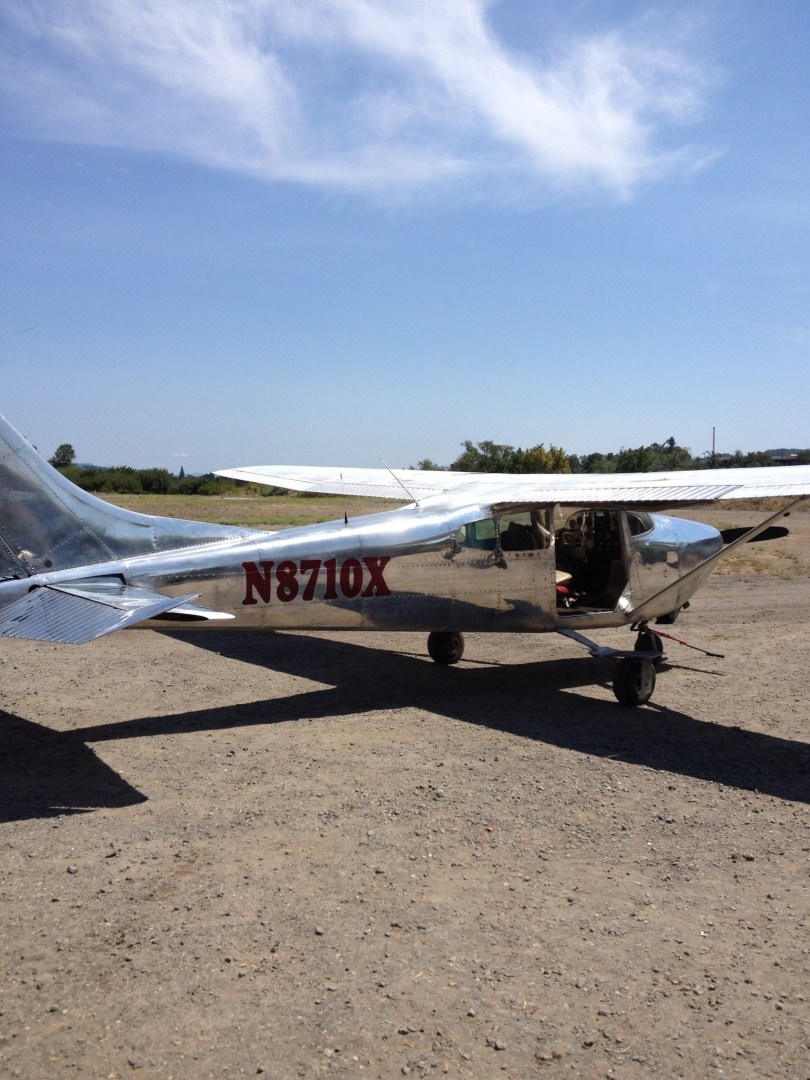
That’s what I’m thinking a few minutes before jumping out of a perfectly good plane. I don’t say it, because let’s face it, though I may have four points of 1500-pound web and metal connection to Tyler, the instructor,  I don’t really know him well enough to be quite that…forward. Despite the fact that I am also sitting on his lap, and in addition to my ass, my life is in his hands.

Moments later he leans forward, taps the pilot on the shoulder, and hollers into my ear, “you ready?”

Fear has prevented me from changing the expression on my face from the frozen smile I had when we took off, so I nod.  At this point, I’ve made the live-or-die decision to go ahead with this business. Matters are really out of my hands on the whole ‘parachute opening’ thing. Now, I’m worried about puking during the jump, which would be fine for me because I’m wearing goggles, and on the bottom, but I’m sure that wouldn’t work out well for Tyler.

Things you don’t think about in advance: of course the plane door opens upward, like on a DeLorean. Otherwise, in 120 knots-per-hour it would come smashing back on my legs, which are now dangling out the hole in the plane’s hull. I’m trying to rest them, ladylike, on the step above the landing gear, but they are just blowing to the side, so I leave it be.

“Chest out,” Tyler says into my ear. “Lean forward,” almost like he’s teaching me to dive. And just like learning to dive, the anticipation is the worst part. With a little lean and a slight push, we’re gone.

There is a moment of tumble, of inertia and movement, and then there: below me is a postcard of wine country. It’s chilly and windy. My mouth is open; when I gave velocity a smirk, it took a gaping grin and pulled all the moisture from my tongue and teeth. I kick my legs out behind me, trying to hit Tyler in the butt just like I was instructed, and let my arms fly out  at my sides. The fall is free and gleeful, and loud with the rush of sky blowing past my ears. You can’t help but yelp, or yip, or yahoo, and so I do. Freely, and gleefully. The fear is left back on the plane with the pilot, coming in for a safe landing on the little air strip far below us.

Then Tyler taps my shoulder again, and again asks, “you ready?” and with that, there is a tug. I hear a flap of fabric against the wind, the sound of a luffing sail, and then the chute snaps taut above us and things become quiet. The vineyards line up below for inspection, organizing the hills into orderly view. Tuscan mansions, wine valley bungalows, trailers and the makeshift labor camps of early pickers speckle the landscape.

Tyler gives me a choice between being still and doing some loops and turns. “Loops and turns,” I shout back in the wind. “Loops and turns!” After two turns, I shout again, “actually, no loops and turns!” I (or more like Tyler) narrowly escape the puking scenario and we return to our graceful float, featherlike. We watch the earth rise to meet us for a five-minute eternity. And then, “lift your feet in front of you,” and here the ground is, right in front of the hangar from which we took off, landing pad of a lifetime, and we walk right in.

Tyler and I, right after walking right back down to the ground

Tyler and I, right after walking right back down to the ground